Lock your dates, confirm who's actually coming, and set a shared budget before you do anything else. That single sequence, dates then headcount then money, prevents the three things that sink group trips: people dropping out at the last minute, confusion over who owes what, and booking a cabin that's the wrong size. Pick one anchor activity next, and the rest of the planning gets a lot easier.
TL;DR:
- Lock in your trip dates through group voting with a set deadline to avoid delays caused by waiting for unanimous consensus.
- Assign specific roles such as lead organizer, payment manager, and activity lead to distribute responsibility and streamline planning.
- Verify cabin details like bedroom and bathroom counts, kitchen capacity, parking, and amenities before booking to prevent mismatched expectations.
- Set clear rules for costs upfront by splitting fixed expenses equally and variable costs based on usage, with deposits collected beforehand to minimize disputes.
- Prepare a flexible activity plan with a few anchor activities and low-effort alternatives, and always have backup options for unpredictable weather.
- ✓Group date voting with DateSync
- ✓AI-powered itinerary generation
- ✓Shared expense management with SplitEase
Table of Contents
- Ready-to-run activities: outdoor and indoor ideas by group size and energy
- Planning and coordination: date voting, roles, and the booking checklist
- Packing, logistics, and safety essentials for a cabin trip
- Three sample itineraries you can copy and adjust
- Make it memorable: rituals, meals, and shared keepsakes
- How CrewsCanvas turns this plan into action
- Structure enough to feel planned, loose enough to feel like a break
- Get your cabin trip organized in one place
- Sources
- FAQ
Ready-to-run activities: outdoor and indoor ideas by group size and energy
The trick to a good cabin weekend isn't packing every hour with plans. It's picking one or two anchor activities that everyone builds their day around, then filling the gaps with low-effort options nobody has to prepare for.
For groups that want to move, outdoor anchors work best. A group hike suits almost any crew, a lake day with kayaks or paddleboards gives everyone something to do at their own pace, and a guided half-day tour (zip line, brewery, wine tasting) works well when you want someone else handling logistics. Group fishing with a friendly contest, smallest catch buys the first round, tends to keep even reluctant anglers engaged.
Not everyone wants a full day of activity, and that's fine. Lower-effort outdoor options fill the space between anchors without demanding much setup:
- Cornhole or ladder toss set up near the porch for anyone drifting in and out
- Dock games like corn hole variations or a simple ring toss for lake cabins
- A sunset walk that doubles as a break from the group for anyone who needs it
- A group photo scavenger hunt with a short list (funniest pose, best view, weirdest bug)
Indoors, a themed dinner followed by an informal talent show gives the group a reason to dress up and laugh at each other, and it costs nothing beyond the meal itself. A movie night with a projector and a dessert bar is an easy fallback for a rainy evening. A board game tournament, bracket-style with a small prize, works especially well for groups of 8 or more since it splits naturally into tables.
Every cabin trip needs at least one shared evening ritual that doesn't require planning once it starts. A bonfire with s'mores is the obvious one, but a story circle (embarrassing childhood memories, worst travel disaster) or a playlist exchange where each person adds five songs to a shared queue both work just as well and cost nothing.

Weather will change your plans at some point, so keep a backup for every outdoor anchor. Swap the hike for the board game tournament, swap the lake day for the movie night, and bring a tarp or canopy for the bonfire in case of light rain. A headlamp and a dry set of firewood solve most of the small annoyances that turn into big complaints.
Planning and coordination: date voting, roles, and the booking checklist
Most cabin trips stall in the group chat before they ever get booked. The fix is a short, deliberate process instead of an open-ended conversation that never resolves.
Start with date voting. Give the group a short list of two or three viable weekends, set a firm deadline (five to seven days is usually enough), and lock the date the moment you hit majority agreement. Waiting for unanimous consensus is how trips die. Once the date is locked, ask for a real confirmation, not a thumbs-up emoji, and treat silence past the deadline as a "no."
Assign a small number of roles so no single person carries the whole trip:
- Lead organizer books the cabin, sets the master schedule, and makes final calls when the group can't agree.
- Payment manager collects deposits, tracks who's paid, and handles the final settlement.
- Meal leads (one or two people) plan the grocery list and cooking schedule so nobody improvises dinner for ten people on day one.
- Activity lead books guided tours, reserves gear rentals, and confirms weather-dependent plans the morning of.
- Safety officer checks fire restrictions, confirms the nearest medical facility, and keeps a printed or offline copy of emergency contacts.
Booking the right cabin matters more than most groups expect. A group-cabin guide focused on Wisconsin trips recommends verifying true bedroom counts (not "sleeps 10" on a pull-out couch), confirming there are enough bathrooms that mornings don't turn into a bottleneck, and checking that the kitchen can actually handle group cooking. Before you book, run through this checklist:
- Confirm real bedroom and bathroom counts against the listing photos, not just the stated capacity.
- Check kitchen size, stove burners, and whether there's enough fridge space for a week of groceries.
- Verify parking for every vehicle and ask about noise rules if you're planning a bonfire or late nights.
- Read recent reviews specifically for noise complaints or missing amenities like advertised dock access, since marketplaces like Vrbo's cabin listings note that amenities such as watercraft access are worth confirming directly.
Money causes more friction on cabin trips than almost anything else, and the fix is deciding the rules before you arrive, not after. A group-trip budgeting guide recommends splitting fixed costs (the cabin, cleaning fee) equally among everyone, splitting variable costs (extra groceries, gas for day trips) by actual usage, and collecting deposits up front so the payment manager isn't chasing people the week of the trip. The same guide suggests adding a contingency buffer of 10 to 15 percent on top of your estimated total to absorb the extra grocery run or the parking fee nobody budgeted for.
Pro Tip: Set up a single shared fund before the trip instead of collecting cash on arrival. It removes the awkward "does anyone have change" conversation entirely.
For the actual mechanics of collecting and tracking money, keep receipts in one place (a shared folder or a dedicated app) and settle up before everyone scatters at the end of the trip, not weeks later over text. Our guide on splitting costs without the drama walks through exactly how to structure this.
Packing, logistics, and safety essentials for a cabin trip
A cabin trip packing list is shorter than a camping list, but a few items make the difference between a smooth stay and a frustrating one. Pack in layers, since cabin weather can swing 20 degrees between morning and evening even in the same season. Bring:
- Sturdy footwear for trails or wet dock surfaces, plus a spare pair for indoor comfort
- A headlamp or flashlight, since most rural cabin roads and paths have no lighting
- Basic cooking tools if the listing doesn't confirm a full kitchen (a sharp knife and a cutting board go a long way)
- Chargers, a portable battery, and any medications packed in a clearly labeled bag
- A basic first-aid kit and insect repellent, especially for lake or wooded settings
Before you arrive, confirm the practical details that don't show up in the excitement of booking: check-in and key pickup instructions, parking limits, garbage and recycling rules, whether Wi-Fi is reliable enough for remote work, and any quiet hours your neighbors expect.
If your cabin sits in wildlife country, food storage isn't optional. The National Park Service's guidance on food and wildlife safety emphasizes securing all scented items, food, trash, and toiletries included, rather than leaving them accessible overnight or in a vehicle. Use bear canisters or lockers where the site requires them, and never assume a cooler in the car is secure enough.

Fire restrictions change by region and by season, and they can shut down your planned bonfire without warning; check local resources such as Camping and Caravanning in the Cotswolds for region-specific guidance. The same NPS guidance advises checking regional fire restrictions before you arrive, so build a backup evening plan (the board game tournament or the movie night) in case an open flame isn't allowed.
For broader safety, NPS camping-safety guidance recommends planning for site-specific hazards like lightning exposure or nearby rivers, and identifying your nearest emergency services before you need them. Save offline maps, do a quick buddy check before anyone heads out solo, and make sure at least two people know the plan for a real emergency.
Three sample itineraries you can copy and adjust
Pick the version that matches your trip length, then swap in whichever anchor activity your group already chose.
- Weekend (two nights): Arrive Friday evening, settle in, and keep the first night low-key with dinner and a fire. Saturday is your anchor day, hike, lake day, or guided tour in the morning, free time in the afternoon, communal dinner and games at night. Sunday is a slow wind-down: coffee, a short walk, then a group checklist for cleaning and departure before checkout.
- Long weekend (three nights): Same Friday arrival, but Saturday becomes your day-trip or paid-activity day (a guided tour, a brewery visit, a longer hike) since you have more time to recover. Sunday is the community cooking night, everyone contributes a dish or a cooking task, followed by the talent show or bonfire. Monday adds a second downtime block before departure, useful for anyone who needs to ease back into the week.
- Weekday recharge (one to two nights, midweek): Keep this one intentionally light. One outdoor option (a short hike or a lake afternoon), one shared meal, and otherwise unscheduled time. Midweek trips work best when nobody feels obligated to fill every hour.
Build buffer time into every transition, especially arrival and departure, since group logistics (parking, unpacking, key pickup) always take longer than expected. If weather threatens your anchor activity, decide the swap the night before rather than debating it at breakfast. For a more detailed walkthrough of building out a full schedule, our guide on building a group trip itinerary covers pacing in more depth.
Make it memorable: rituals, meals, and shared keepsakes
The moments people actually remember from a cabin trip are rarely the big planned activities. They're the small repeated things: a sunset toast on the porch, a specific person always making coffee first, a final-night round of mock awards for the trip's best and worst moments.
Meals are easier when they scale by design rather than by effort. A potluck night with a loose theme removes pressure from any one cook, a rotating chef schedule spreads the work evenly, and sheet-pan dinners feed a crowd with minimal cleanup.
Light competition keeps energy up without demanding much setup:
- A cornhole bracket run over the course of the weekend, not just one match
- A scavenger hunt with a short, specific list rather than an open-ended one
- A fishing contest with a small, silly prize for smallest catch or first catch
Before everyone leaves, start a shared photo album or playlist that people keep adding to, and put together a short highlight reel or slideshow afterward. It costs almost nothing and turns into the thing everyone reshares when planning the next trip.
How CrewsCanvas turns this plan into action
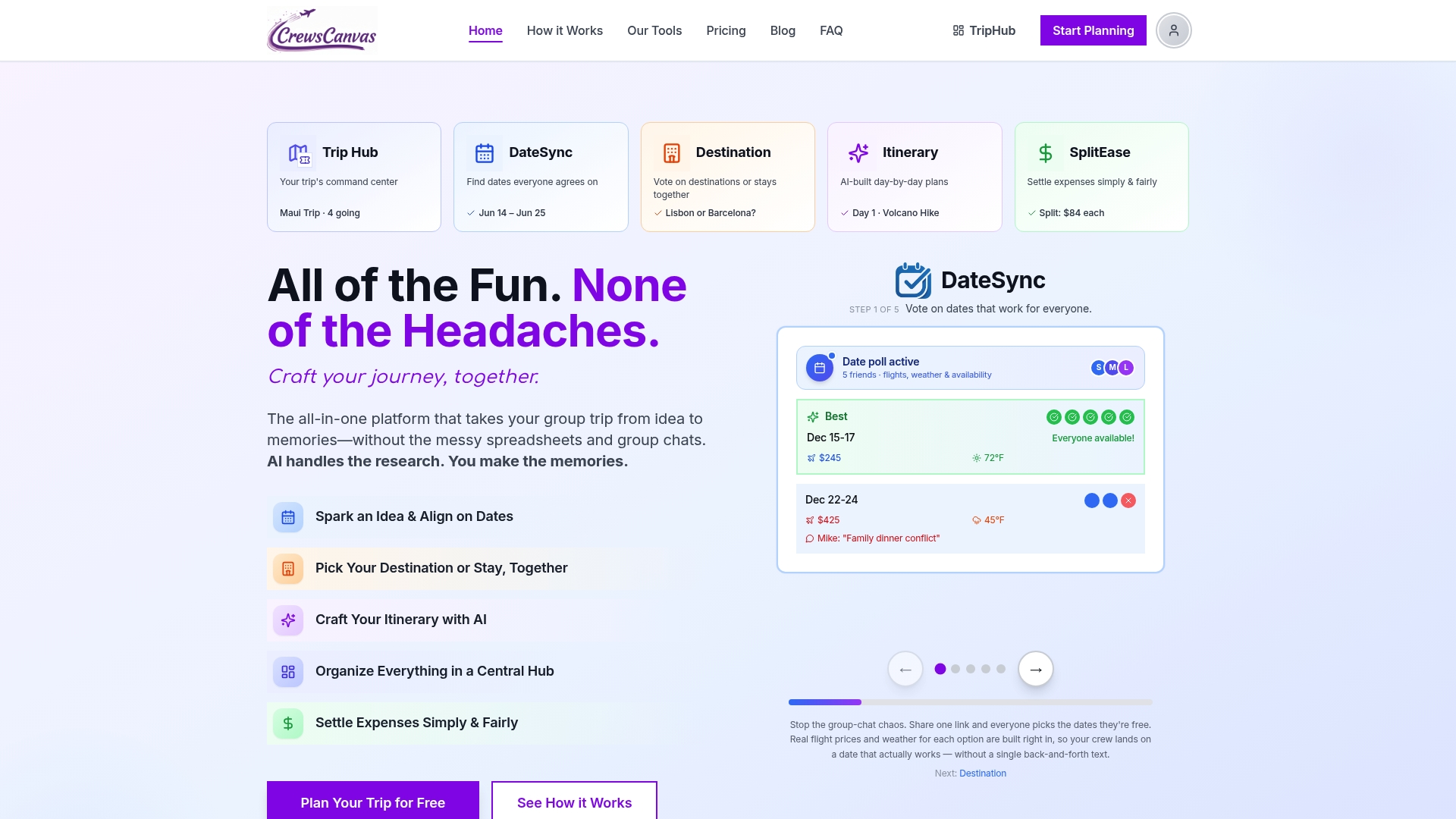
Every step above maps to a specific tool. DateSync replaces the endless "does this weekend work" thread with a real vote and a locked date. The AI itinerary generator takes your chosen anchor activities and drafts a day-by-day schedule you can edit and share instantly through the itinerary builder. SplitEase handles deposits, tracks receipts, and splits fixed and variable costs automatically, so the payment manager isn't sending awkward reminder texts. Create a trip, invite your group, collect commitments, and export the itinerary before anyone packs a bag.
Structure enough to feel planned, loose enough to feel like a break
The best cabin trips have one person steering and just enough structure to avoid decision fatigue, not a schedule packed tight enough to feel like a second job. Groups that over-plan tend to burn out the introverts and rush the mornings; groups with zero plan tend to spend the whole weekend negotiating what to do next. Pick one new ritual and one low-effort activity for your next trip, and let the rest stay unscheduled.
— CrewsCanvas
Get your cabin trip organized in one place
Once you've picked dates, roles, and a budget, the last step is making sure none of it lives in five different group chats. CrewsCanvas keeps the whole plan, voting, itinerary, and money, in a single link your group can open without downloading anything or creating an account.
Depending on your group size and how often you plan trips, one of three options fits: the Free plan covers small groups planning a single getaway, the Pro Subscription suits organizers running multiple trips a year, and One-Trip Pro unlocks full features for a single trip without a recurring charge. All three are listed on the pricing page.
- Create your trip and invite your group with a shared link, no app required.
- Run DateSync to lock your weekend and confirm real commitments.
- Set up SplitEase to collect deposits and track shared costs from day one.
Browse the full feature set on our tools page and get your group's plan started today.
Sources
- Bear safety: food and trash | National Park Service
- Vacation Rental Prices In USA 2026: Cost Guide
- How to Organize a Group Camping Trip on a Budget | Pooled Blog
- The Perfect Friend Group Cabin Weekend in Wisconsin | Stay Northern
FAQ
What should you do in a cabin with friends?
Plan around one or two anchor activities, like a hike, a lake day, or a board game tournament, and fill the rest of the time with low-effort options like cornhole, a bonfire, or a movie night. Mixing structured plans with genuine downtime tends to keep the whole group happier than a packed schedule.
Where is the best place to take a cabin trip with a group?
The right location depends on what your group wants: lake settings suit water activities and dock games, while mountain or forest cabins suit hiking and wildlife viewing. Whichever region you pick, prioritize a cabin with verified bedroom and bathroom counts and a kitchen big enough for group cooking, as recommended in cabin-booking guidance for groups.
Where is the best place to travel with friends in general?
There's no single best destination since it depends on group size, budget, and how active people want to be, but cabin rentals tend to work well for groups because they offer shared kitchens and common space that hotels don't. Comparing fee-inclusive totals rather than headline nightly rates, as suggested in vacation rental pricing guidance, helps you pick a spot that fits everyone's budget.
How much does a cabin getaway typically cost?
Costs vary widely by location, season, and group size, so it's worth comparing total, fee-inclusive pricing (nightly rate plus cleaning and service fees) rather than the advertised nightly rate alone, as vacation rental pricing guides recommend. Building in a contingency buffer on top of your estimated total, per group budgeting guidance, helps avoid mid-trip surprises.
How do you keep group trip costs fair among friends?
Split fixed costs like the cabin and cleaning fee equally among everyone, and split variable costs like extra groceries or gas by actual usage. Collecting deposits before the trip and using a shared tracking method, like SplitEase, keeps the accounting transparent and avoids awkward money conversations after the fact.