
Lock your dates and budget first, name one organizer, then let three tools do the heavy lifting: date voting to kill the scheduling standoff, an AI-generated itinerary draft to give the group something concrete to react to, and shared expense tracking to keep money honest. A platform bundles all three so nothing gets lost between six group chats.
TL;DR:
- Lock your dates and budget early, proposing three options and setting deposit deadlines within 48 hours to secure commitments and avoid delays.
- Use constrained date proposals and deposit voting to prevent endless debates, ensuring the group agrees within a 48 to 72-hour window.
- Draft the itinerary from a clear constraints brief using AI, then gather quick approvals to finalize plans efficiently, avoiding weeks-long stalls.
- Separate shared costs from personal expenses before booking, and use a shared expense tool to track payments and prevent disputes.
- Book lodging at least six months in advance and coordinate roles early to secure peak accommodations, flights, and rentals at the best prices.
Table of Contents
- Group Ski Trip Planning Checklist: Your First 48 Hours
- How Do You Pick Ski Trip Dates Without a Never-Ending Group Chat?
- How Do You Build a Ski Trip Itinerary Fast?
- Splitting Ski Trip Costs Fairly: Rules That Prevent Fights
- Ski Trip Booking Timeline: Who Locks What and When
- Pre-Trip Briefing and In-Resort Coordination
- Choosing the Right Resort for a Mixed-Ability Group
- Renting Ski Equipment for a Group Without Overpaying
- Travel Insurance for Group Ski Trips: What to Check Before You Book
- Planning Group Meals and Après-Ski Without Chaos
- Handling Group Conflict on a Ski Trip Before It Ruins the Week
- Why Integrated Tools Beat Spreadsheets and Group Chats
- Plan Your Ski Trip in One Place With CrewsCanvas
- Sources
- FAQ
Group Ski Trip Planning Checklist: Your First 48 Hours
The first two days set the tone for everything after. Move fast here, or your trip stalls in "let me check my schedule" purgatory for three weeks.
- Propose three date windows and a rough per-person budget range, plus any non-negotiables (school breaks, work blackout dates).
- Collect RSVPs within 48 hours and set a deposit deadline so "maybes" convert to commitments.
- Name one organizer and create a single shared plan link everyone can reference instead of five separate texts.
- Decide upfront which costs are shared (lodging, lift passes) versus personal (gear rental, bar tabs).
That last point sounds minor. It's the one that prevents the ugliest argument of the entire trip: someone assuming their $40 rental was covered by the group pool when it was not.
How Do You Pick Ski Trip Dates Without a Never-Ending Group Chat?
Date debates die a slow death in group texts. The fix is constraint, not more discussion.
Offer two or three specific date blocks, not an open-ended "when works for everyone?" Give the group 48 to 72 hours to respond, and treat silence as a soft no. Agreeing on dates, budget, and trip style early is the single most repeated piece of advice in group ski planning guides, and for good reason: every week the date stays open, someone else books a conflicting commitment.
A few tactics that actually reduce flaking:
- Use commit-with-deposit voting. Asking for a small deposit alongside a date vote filters out the people who were never really coming.
- Go anonymous when money or scheduling is sensitive. Anonymous polling lets someone vote for the cheaper week without publicly admitting a tight budget.
- Use named votes for logistics decisions, like who needs an early flight or extra ski days, where accountability matters more than privacy.
- Set a hard lock date. Once a majority commits, close the poll. Reopening it for latecomers restarts the whole debate.
This is exactly the gap DateSync is built to close: participants vote on real date options without downloading anything or creating an account, and the organizer locks the winner once quorum hits.
How Do You Build a Ski Trip Itinerary Fast?
Building an itinerary by committee is how trips die in the planning stage. Nobody wants to be the person proposing the schedule, so nobody does, and the group drifts for weeks. The faster move: draft first, react second.
- Write a short constraints brief. Group size, skill levels (beginner to expert), must-do activities, and how many rest days you want.
- Generate a day-by-day draft. Starting from a concrete itinerary proposal beats blank-page brainstorming almost every time, because people find it far easier to critique a plan than build one from nothing. This is where an AI itinerary generator earns its keep: feed it the brief and get a full draft in minutes instead of days.
- Send a quick approve-or-swap ballot. Instead of "thoughts on the itinerary?", ask specific yes/no questions: "Keep Tuesday as a rest day, or swap for snowshoeing?"
- Cluster activities geographically. Group lessons, rentals, and dining near the same base area so you're not burning ski time on shuttle rides.
- Leave one or two days unscheduled. Not everyone wants to ski five days straight. Free days let the intermediate skiers rest while the experts hit the back bowls.
This brief to draft to ballot loop usually takes a group from zero plan to a finalized itinerary in under a week, versus the weeks-long group-chat drift that kills momentum on most trips. An AI planner runs this workflow, turning your constraints into a shareable day-by-day draft the group can vote on directly inside the plan.
Splitting Ski Trip Costs Fairly: Rules That Prevent Fights
Money is where good ski trips turn into bad memories. The fix isn't complicated, but it has to happen before you book anything, not after the credit card statement arrives.
Start by drawing a hard line between shared costs and individual costs. Lodging, group lift passes, and shared transportation go in the pool. Personal gear rental, ski school add ons, and bar tabs stay individual. Write this split down somewhere everyone can see it, not in someone's memory.
From there:
- Collect deposits with a firm deadline. No deposit, no reserved spot. This alone eliminates most flaking.
- Share a per-person cost breakdown as soon as lodging and passes are booked, so nobody discovers their share three weeks before departure.
- Use a pooled fund or expense-splitting tool from day one. Tracking group expenses from the start rather than reconstructing receipts after the trip is what separates smooth settlements from awkward Venmo chains that drag on for a month.
- Assign one payments lead. Someone has to own collections and reminders, even if the organizer handles everything else.
- Handle partial stays with a formula, not a negotiation. Split fixed lodging costs by nights stayed and split activity fees by actual participation, then log the exception in the shared plan so there's a record instead of a memory dispute.
Pro Tip: Price premium rooms and suites separately from the base group rate. If four people want the room with the better view, charge them the difference directly instead of averaging it across everyone else. This one move prevents more resentment than any other budgeting decision on a group trip.
A tool like SplitEase handles this natively, letting the group scan receipts and settle balances without anyone doing math in a group chat.
Ski Trip Booking Timeline: Who Locks What and When
Booking order matters more than most people realize. Lodging goes first because group-sized units sell out fastest, especially over peak weeks.
- Six or more months out: lock lodging. Booking accommodations before anything else protects you from the reality that chalets and multi-bedroom units disappear first for holiday weeks and school breaks.
- Three to four months out: book flights. Group airfare pricing tends to firm up in this window, and waiting longer usually means paying more for worse seat assignments.
- One to two months out: lock lift passes and gear rental. Multi-day and group passes sometimes carry early-booking discounts that vanish closer to your travel dates.
Assign roles early so the organizer isn't doing everything solo: a payments lead handles deposits and settlements, an activities lead books lessons and off-slope plans, and a gear lead coordinates rental sizing and pickup times. For groups above roughly a dozen people, aim for a single property or nearby units rather than scattering across a resort town. A shared meeting point at the base area matters more once you're past a group of ten or so.
Pre-Trip Briefing and In-Resort Coordination
Send one clear message about a week before departure. It should cover meeting points and times, what's included in group bookings, transfer details, and the plan for the first evening. A short pre-departure briefing headed off far more day-one confusion than any amount of pre-trip group chat volume.
Once you're on the mountain, don't rely on cell signal to coordinate. It's unreliable at altitude and worse inside a gondola line.
- Pick one fixed daily meetup, like the same lunch spot at the same time every day.
- Confirm equipment pickup windows and lesson start times before the first ski day, not the morning of.
- Reconfirm any group dinner or activity reservations the night before, since resort restaurants sometimes shuffle tables for larger parties.
Fixed habits beat spontaneous texting every time snow or crowds mess with your signal.
Choosing the Right Resort for a Mixed-Ability Group
The best resort for a group ski trip isn't the one with the gnarliest terrain. It's the one where a beginner and an expert can both have a good day without either one waiting around bored.
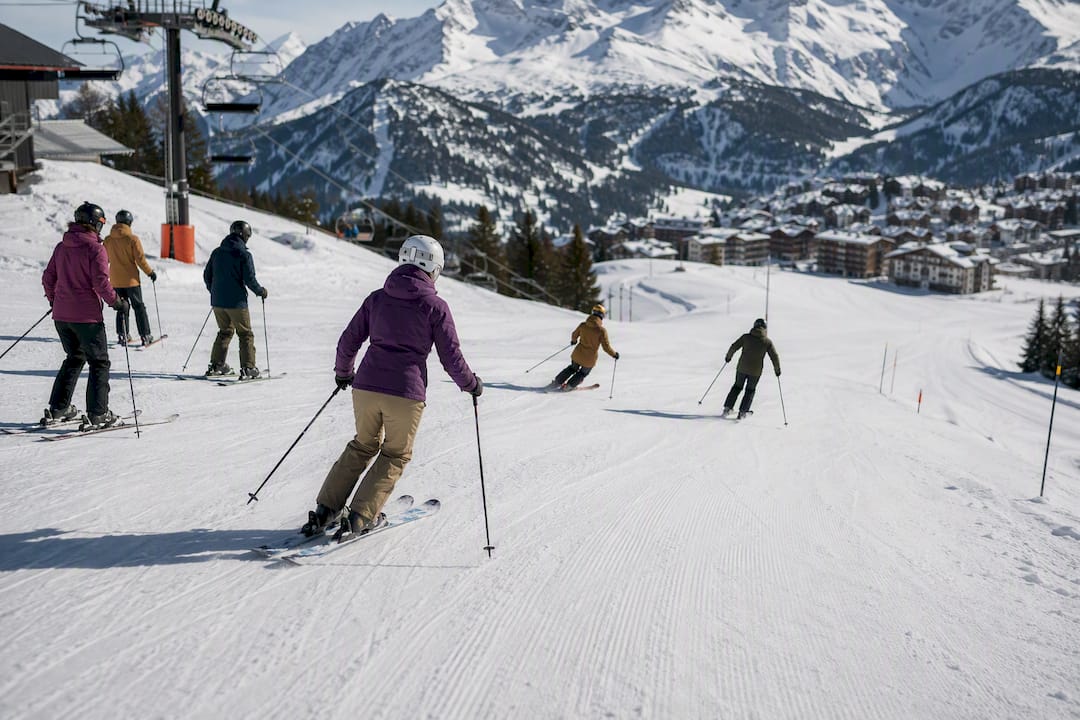
Start by counting skill levels honestly. A group with two beginners, three intermediates, and one expert needs a resort with genuine variety across all three, not just advanced terrain with a token bunny hill bolted on. Look specifically at how the mountain connects difficulty levels. Some resorts split beginner and advanced terrain into separate base areas, which means your group scatters the moment everyone clicks in. Others let a mixed group ride the same lift and peel off onto different runs, which keeps lunch plans simple and nobody feels stranded.
Ski school availability matters more for group trips than solo ones. If two or three people in your group are new to skiing, check group lesson pricing and whether lessons run at times that let beginners rejoin the group by early afternoon. Off-slope options count too. A resort with a real base village gives non-skiers and rest-day people something to do besides sit in a rental unit. Snow reliability and terrain size matter less for a group than logistics: how close lodging sits to the lifts, whether there's a free shuttle, and whether the resort feels navigable for someone on their first trip.
Renting Ski Equipment for a Group Without Overpaying
Individual rentals at resort-based shops add up fast, and prices climb the closer you get to your travel dates. Booking as a group changes both the price and the hassle.
Most rental providers, whether resort-based or independent shops in town, offer bulk discounts once you're booking five or more sets of gear together. The savings usually beat what you'd get booking separately, even with everyone using the same shop. Reserve gear at least a few weeks ahead for peak weeks, since popular sizes in boots and skis run out first.
A few practical moves save real time and money:
- Book one shop for the whole group rather than letting everyone pick their own, so pickup happens in a single visit instead of six separate ones.
- Collect sizing information in advance (height, weight, boot size, ability level) and send it to the shop before arrival to cut fitting time in half.
- Compare in-town shops to resort-based counters. Town shops are often cheaper and less crowded, though resort counters save a commute on the first morning.
- Ask about multi-day discounts if you're renting for four days or more; per-day rates usually drop the longer the rental period.
Gear pickup logistics belong in your pre-trip briefing, not figured out on the mountain at 8 a.m. with a line behind you.
Travel Insurance for Group Ski Trips: What to Check Before You Book
Standard travel insurance often excludes skiing and snowboarding entirely, or covers them only under a "winter sports" add-on with a higher premium. Before your group books anything, confirm whether the policy you're considering actually covers on-mountain injuries, not just trip cancellation and lost luggage.
For a group trip specifically, a few details matter more than they would for a solo traveler. Check whether the policy covers off-piste or backcountry skiing if anyone in your group plans to leave marked trails, since many standard winter sports add-ons exclude it. Look at medical evacuation coverage carefully. Mountain injuries sometimes require helicopter evacuation, and out-of-pocket costs for that can run into the tens of thousands of dollars without the right coverage.
Group trips also raise a cancellation question that solo trips don't: what happens if one person can't travel? Some policies let each traveler insure their own share of prepaid costs independently, which matters if your group has pooled deposits for lodging. If someone drops out after the group has paid a shared deposit, their individual cancellation coverage may reimburse them directly rather than leaving the group to absorb the loss.
Buy insurance close to when you make your first non-refundable payment, not right before departure. Many policies only cover pre-existing conditions or cancellation reasons that arise after the policy purchase date, so waiting too long can leave real gaps.
Planning Group Meals and Après-Ski Without Chaos
Feeding a group of eight or ten skiers is its own logistics problem, and it gets messy fast if nobody plans it.
Decide early whether you're cooking most meals or eating out most nights. A chalet or condo with a full kitchen makes group breakfasts and at least a few dinners in cuts costs significantly compared to restaurant meals for a full group every night. Assign a rotating cooking duty or split grocery runs among a few people rather than leaving it to whoever's already exhausted from a day on the slopes.

For dining out, book group reservations ahead of time, especially for peak weeks. Popular resort restaurants often cap large-party seating or require advance notice for tables above six people. Après-ski is where groups naturally splinter, some want a bar, some want to nap, some want the hot tub, so treat it as optional rather than mandatory. Pick one loose daily après meeting point (the same bar, same time) so people can drift in and out without a group text chain.
If your group wants a livelier social scene beyond the standard bar crawl, looking at event and party planning ideas built for group travel can help structure a bigger night out without one person doing all the organizing. For groups with kids or non-skiers who want daytime options beyond the lodge, checking local family-friendly activities near your resort town rounds out the trip for people who aren't spending all day on the mountain.
Handling Group Conflict on a Ski Trip Before It Ruins the Week
Every group ski trip hits friction somewhere: someone wants to ski all day while someone else wants a rest day, or the budget conversation gets tense when one person keeps ordering the pricier menu items. The trips that stay fun aren't the ones without friction. They're the ones with a plan for handling it.
Split the group by pace, not by loyalty. If three people ski hard and three prefer cruising, let them ski separately in the morning and reconnect for lunch. Forcing a mismatched group to ski together all day breeds resentment faster than almost anything else on the trip.
Address money tension immediately, not at the end of the trip. If someone's spending noticeably more than the group average, a quick private conversation from the organizer beats a passive-aggressive comment in the group chat on day four. This is exactly why a transparent, shared expense record matters: when everyone can see the same numbers, arguments about who owes what mostly disappear before they start.
Give people permission to opt out of activities without guilt. Not every dinner needs full attendance, and not every ski day needs the whole crew. The organizer's job isn't to force unity, it's to keep the shared logistics (lodging, transport, key reservations) running smoothly while letting individual days flex. Trips fall apart when the organizer tries to control everything, not when a few people peel off for an afternoon.
Why Integrated Tools Beat Spreadsheets and Group Chats
Spreadsheets and split group chats fail for the same reason: they put the coordination burden entirely on one exhausted organizer instead of the tools doing the work. A shared spreadsheet still requires someone to manually chase votes, update the itinerary, and reconcile expenses by hand every single time something changes.
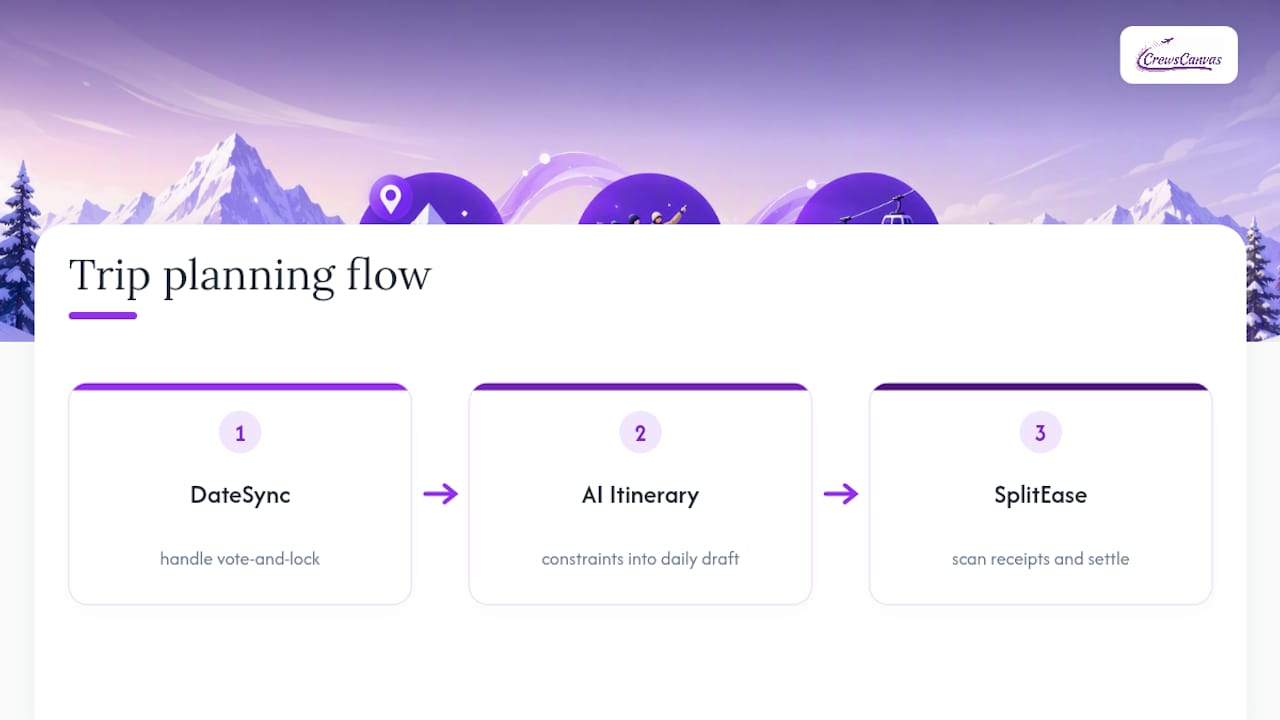
The workflow this article describes, date voting, an AI-drafted itinerary, transparent expense tracking, only works well when those three pieces talk to each other in one place: date voting handles the vote-and-lock process, the AI planner turns a constraints brief into a day-by-day draft, and expense tracking keeps the money transparent from the first deposit to the final settlement. None of that replaces the organizer. It just means the organizer delegates the busywork and stays the single point of contact for decisions, instead of becoming the group's unpaid full-time project manager.
— CrewsCanvas
Plan Your Ski Trip in One Place With CrewsCanvas
The platform replaces the spreadsheet-and-group-chat mess with one shared hub built specifically for this workflow. Date voting handles the date poll and lets the group vote without anyone downloading an app or creating an account. An AI planner turns your constraints brief into a day-by-day draft your crew can approve or swap in minutes. And expense tools keep every deposit, lodging split, and rental fee transparent from booking day to the final settlement, no reconstructing receipts three weeks later.
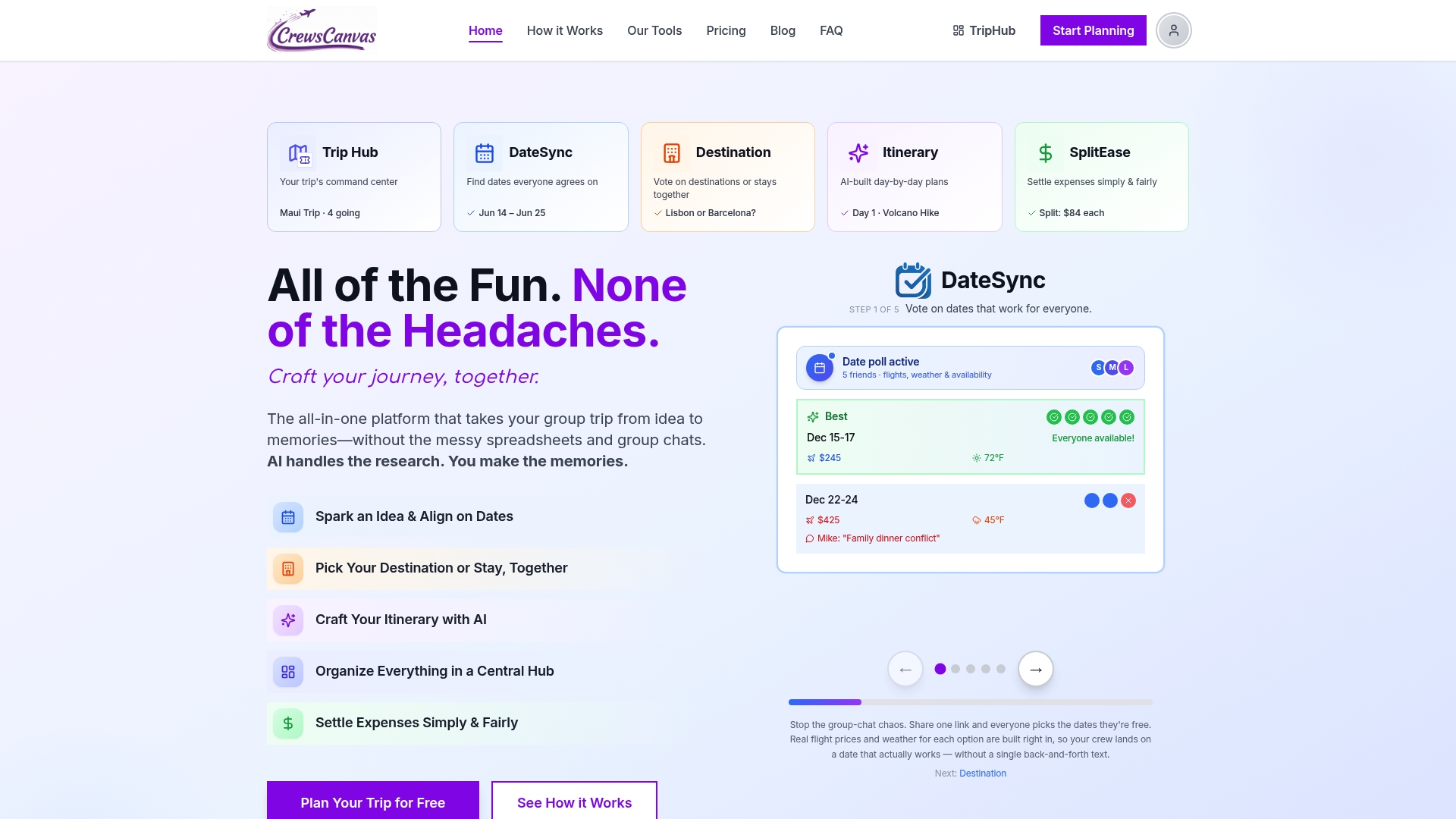
Every group can start on the Free plan to test DateSync, the AI planner, and SplitEase on a real trip. For bigger groups or trips needing extra capacity, the Pro Subscription runs $9.99 per month, and One-Trip Pro unlocks full features for a single trip at a $14.99 one-time payment, no ongoing subscription required. Check out the full toolkit to see how DateSync, the AI planner, and SplitEase work together, then start your trip plan and send the link to your group today.
Sources
- How to organise a group ski holiday │ WeSki Guides
- How to Plan a Group Trip Without Spreadsheets (and Without Losing Friends) | Travo
- How to Plan a Group Ski Trip | Ski Resorts for Kings
- The Ultimate Guide to Planning a Group Ski Trip | Pooled Blog | Pooled
FAQ
What's the Best Way to Organize a Group Ski Trip?
Lock dates and budget first, appoint one organizer, then use date polling, an AI-generated itinerary draft, and a shared expense tool from day one. A platform like CrewsCanvas runs all three in a single shared link instead of scattered spreadsheets and group chats.
How Far in Advance Should You Book a Group Ski Trip?
Lock lodging at least six months out for peak weeks, since group-sized units sell out fastest. Book flights three to four months ahead and lift passes or gear rental one to two months before departure.
How Do You Split Costs Fairly on a Group Ski Trip?
Separate shared costs (lodging, group lift passes) from individual costs (personal gear, bar tabs) before booking anything. Using a pooled fund or expense-tracking tool from day one prevents the post-trip reconciliation fights that come from reconstructing receipts after the fact.
What's the Ideal Group Size for a Ski Trip?
Groups of roughly six to twelve people work best for communal lodging like a single chalet. Larger groups usually need split accommodation in nearby units plus a fixed daily meeting point to stay coordinated.
Does CrewsCanvas Cost Anything to Use?
CrewsCanvas offers a Free plan for smaller groups planning a trip. Paid upgrades include a Pro Subscription at $9.99 per month or a One-Trip Pro option at $14.99 as a one-time payment for a single trip's full features.