
Plan a smooth friends-and-family retreat by locking dates first, agreeing on a baseline budget, and building a shared itinerary and expense tracker before anyone books a flight. Every group needs three tools working together: date voting, a flexible itinerary, and a transparent expense tracker. CrewsCanvas bundles all three into one hub, but the process matters more than the app you use.
TL;DR:
- Lock in travel dates within 2 days through a narrow poll to avoid delays, and assign one person to manage all responses and calendar holds.
- Plan the trip budget based on the group's lowest comfortable spending amount, and split shared costs with a 10 to 15 percent buffer to prevent disputes.
- Build an itinerary around one or two key activities per day, leaving free time, and assign a daily point person to handle logistics and reservations.
- Book refundable rates and set deadlines aligned with price increases or availability to reduce financial risk and keep planning on track.
- Use integrated tools like CrewsCanvas for polling, itinerary building, and expense tracking, avoiding multiple apps and maintaining momentum.
- ✓Date voting with DateSync
- ✓AI-powered itinerary generation
- ✓Shared expense management with SplitEase
Table of Contents
- How Far Ahead Should You Start Planning a Team Retreat?
- What's the Best Way to Run a Date Poll?
- How Do You Set a Fair Budget and Split Costs?
- How Do You Build an Itinerary That Doesn't Feel Like a Schedule?
- Who Books What, and When?
- Who Should Own What Decisions?
- Getting the Balance Right on a Group Retreat
- Plan the Whole Trip Without Six Different Apps
- Sources
- FAQ
How Far Ahead Should You Start Planning a Team Retreat?
Domestic trips need several months of runway; international ones need more time, according to group trip planning guides. Bigger groups need more lead time, not less, because every added person multiplies the number of calendars you're working around.
Set decision windows early and stick to them:
- 48 hours to vote on dates once a poll goes out
- One week to reach agreement on the baseline budget
- Booking deadlines tied to when prices start climbing or rooms sell out
Stragglers are inevitable. The fix isn't chasing them. Set a default (the trip proceeds with whoever has confirmed by the deadline), hold a few calendar slots for late responders, and communicate that holds expire. This keeps momentum without punishing anyone for a slow reply.
What's the Best Way to Run a Date Poll?
Locking dates first is the single most important move in team retreat planning. Everything else, from booking flights to drafting the itinerary, stalls until the group agrees on when. Guides on coordinating group trips recommend starting with a target window, then narrowing to 2 or 3 realistic options rather than asking people to pick from a blank calendar.
- Propose a broad window (say, "sometime in the second half of June") based on rough availability you already know.
- Narrow that window to 2 or 3 specific date ranges using a quick poll.
- Send the poll with a 48-hour deadline and pick whichever range has the fewest conflicts.
- Send calendar holds immediately so nobody double-books the weekend.
Different poll formats work for different groups. A fixed-window vote works when everyone's flexible. Ranked preferences work better when people have hard constraints, like a wedding the week before. A simple "best / okay / no" grid is the fastest option for groups larger than eight, since it avoids the analysis paralysis that comes with ranking five options.
Pro Tip: Assign one person as the calendar owner from day one. That person sends the poll, tracks responses, and sends the holds. Without a single owner, half the group votes twice and the other half never sees the poll.
Once the window is locked, share the results with the whole group and immediately set the next deadline: choosing accommodations. Momentum dies fastest right after a decision, so don't leave a gap.
How Do You Set a Fair Budget and Split Costs?
Ask everyone for their maximum comfortable spend, then plan the whole trip around the lowest number in the group. That single move, recommended by group travel planning experts, prevents the awkward moment three weeks in where one person quietly drops out because the trip got too expensive for them.
Not every cost belongs in the shared pool. Split these fairly between shared and individual:
- Shared: the house or villa rental, groceries for group meals, a rental car everyone uses
- Individual: flights, personal shopping, any solo excursions someone opts into
A 10 to 15 percent buffer for shared costs is standard advice from group-trip guides, and it's the difference between a calm group chat and a tense one when the grocery bill runs higher than expected or someone's flight gets rebooked at the last minute.
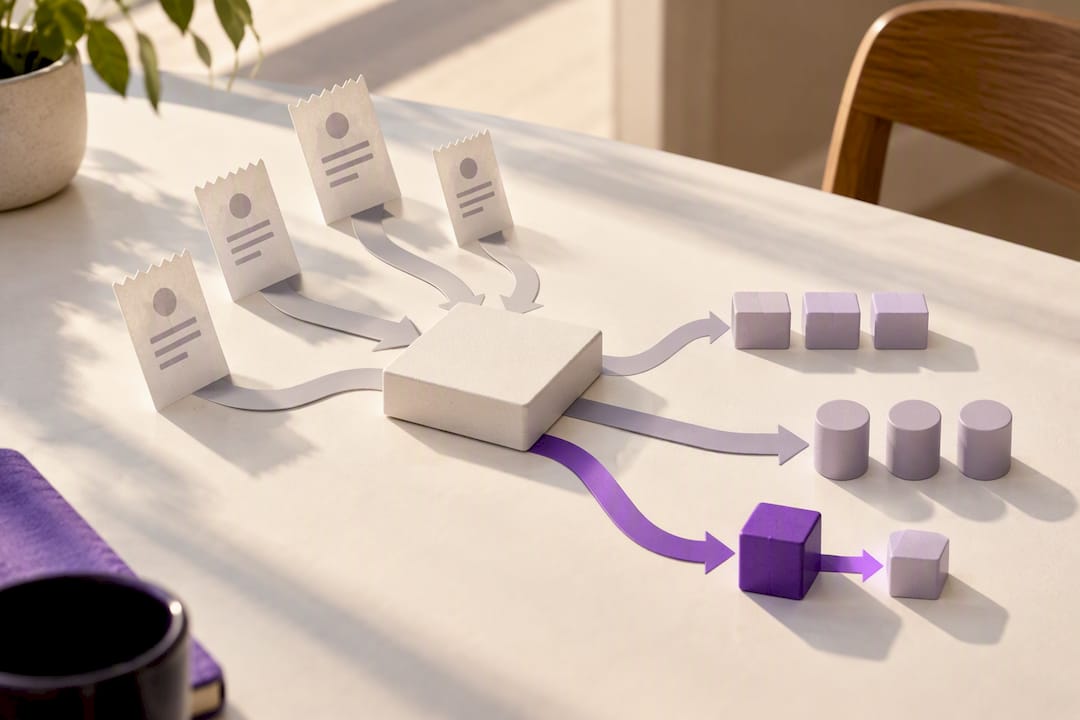
For tracking, log every shared charge as it happens, save the receipt, and settle up within a week of getting home. Waiting longer than that is when people start forgetting what they actually paid for. Three splitting methods cover almost every situation: an even split for costs everyone benefits from equally, a per-person share for costs that scale with number of guests, or an assigned payer who fronts the cost and gets reimbursed. A tool like SplitEase can log this automatically from photographed receipts, which beats a spreadsheet nobody updates.
How Do You Build an Itinerary That Doesn't Feel Like a Schedule?
Structure each day around one or two anchor activities, morning, afternoon, or evening, and leave the rest open. Itinerary planning guidance backs this up: too much structure kills the vacation feeling, but zero structure means half the group spends every evening arguing about what to do next.
Here's the practical build:
- Run a short poll on "must-do" items before you start drafting anything. This tells you which activities are non-negotiable for the group versus nice-to-haves.
- Protect at least one fully free day on trips longer than four or five days. Nobody wants every waking hour programmed.
- Keep the itinerary in a shared, editable document (or a group trip itinerary builder) so addresses, reservation confirmations, and backup plans for rainy days live in one place instead of six different text threads.
- Assign a daily point person, someone different each day if you want to spread the load, who handles logistics like navigation and meeting times so the whole group isn't checking a map at once.
This structure works because it separates decisions that need group input (what to do) from decisions that don't (who's driving). Skip the poll and you'll spend day one relitigating what the "must-do" list even is.
Who Books What, and When?
Individual items like flights and personal rooms should be paid individually. Shared expenses like the house rental or a group activity deposit should come from the shared budget, ideally through a joint tracker rather than one person's card. This keeps the money trail clean from the start.
Tie every booking deadline back to the timeline you set earlier, and actually communicate the consequence of missing one. Firm, published deadlines keep planning moving instead of stalling out while everyone waits on the last one or two people.
A few tactics reduce price risk without adding much work:
- Book refundable rates whenever the price difference is small.
- Hold calendar dates the moment they're confirmed, before booking anything.
- Try to match flights within the group when it's cheap to do so; it makes ground transportation and check in times far simpler.
- Set a deposit schedule for larger shared bookings so nobody's hit with one huge charge late in the process.
- Add a buffer week between your final deadline and the trip start, in case something needs fixing.
Who Should Own What Decisions?
Smaller groups can run loose, but once you're past six or seven people, clear roles keep things from stalling.
- Name a lead organizer who has final say once deadlines pass.
- Assign role leads for flights, lodging, activities, and finances so no single person owns everything.
- Set the decision rule up front: majority vote for most calls, organizer's call when a deadline hits and votes are still pending.
- Keep one shared document as the single source of truth, but use separate chat threads for separate topics so the "where are we eating" conversation doesn't bury the flight discussion.
- Set a joining deadline for late additions and decide in advance how they cover their share of costs already paid by the group.
Getting the Balance Right on a Group Retreat
Most group trips don't fall apart over money or scheduling in isolation. They fall apart because nobody owned the decision, so it just sat there until frustration built up. The fix isn't more meetings. It's naming an owner for each piece (dates, budget, itinerary, expenses) and giving that person a deadline with teeth.
The groups that stay closest to each other during the trip are usually the ones that planned the loosest itinerary that still had structure. One or two anchor activities a day, the rest left open. Too rigid and people feel managed. Too loose and half the group spends every evening negotiating dinner plans.
The most common planning mistake is treating every decision as needing full consensus. Some things (the dates, the budget ceiling) genuinely need everyone's buy-in. Most things (which restaurant, whose turn to drive) just need someone to decide and move on.
— CrewsCanvas
Plan the Whole Trip Without Six Different Apps
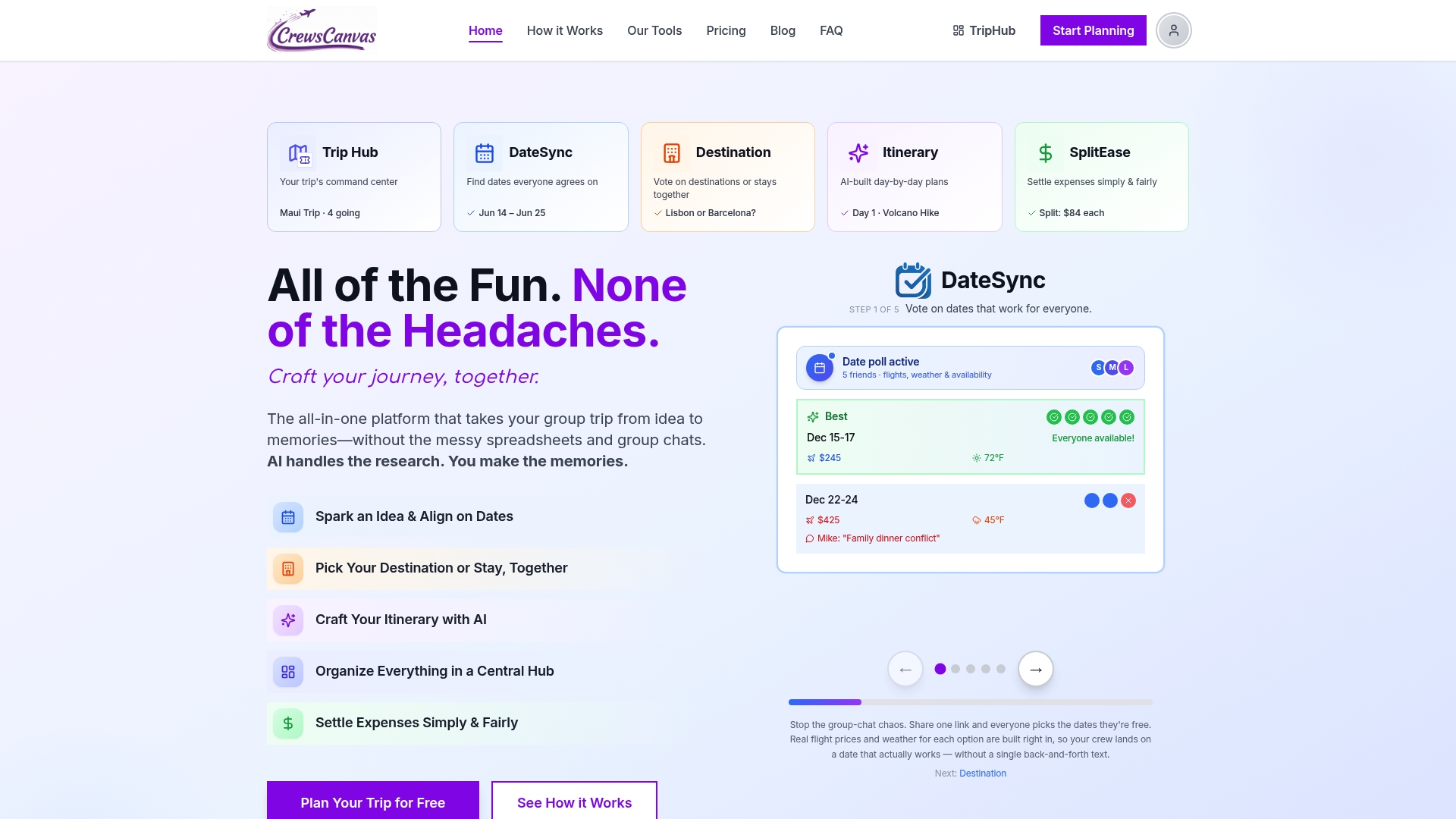
CrewsCanvas exists because the process above works, but running it across a group chat, three spreadsheets, and a separate polling app is exactly where trips lose momentum. DateSync handles the 48-hour date poll and calendar holds in one step. The AI itinerary tool builds an editable, anchor-based schedule from the group's must-do votes instead of a blank document nobody fills in. And SplitEase tracks shared costs from scanned receipts and settles balances automatically, so nobody has to be the person chasing a Venmo request three weeks later.
None of your group needs to create an account or download anything to vote on dates or check the itinerary. Start with the Free plan for smaller trips, and upgrade to the Pro Subscription at $9.99 per month or grab One-Trip Pro for $14.99 as a one-time purchase if you need more capacity or advanced features for a bigger group. Head to CrewsCanvas and send your first date poll today.
Sources
- Group Travel Planning: How to Coordinate a Trip With Friends Without the Headache - WhenNOT Blog
- Friends Trip Planning: How to Plan a Group Trip Without Stress - Traveling Ears
FAQ
How Far in Advance Should You Start Planning a Team Retreat?
Start 3 to 4 months ahead for domestic trips and begin earlier for popular periods or international travel, giving larger groups extra lead time. This lines up with the recommendations in most group trip planning guides and gives you enough runway to lock dates, agree on budget, and still book before prices climb.
What's the Fastest Way to Get a Group to Agree on Dates?
Run a 48-hour poll on 2 or 3 realistic date ranges instead of asking for open-ended availability. Send calendar holds the moment the window is decided, and name one person as the calendar owner to manage the whole process.
How Do You Handle Group Members With Different Budgets?
Ask everyone for their maximum comfortable spend and plan the trip around the lowest number in the group. Keep shared costs like lodging and groceries in a common pool with a 10 to 15 percent buffer, and let flights and personal spending stay individual.
Does CrewsCanvas Cost Anything to Use?
CrewsCanvas offers a free plan for smaller trips, with a Pro Subscription at $9.99 per month or a one-time One-Trip Pro upgrade at $14.99 for bigger groups or extra features. Full pricing details are available on the CrewsCanvas pricing page.
Who Should Be in Charge of a Group Trip's Itinerary?
One lead organizer should own the overall itinerary, but a daily point person can handle on-the-ground logistics like reservations and meeting times. This split keeps big decisions centralized while spreading out the day-to-day workload so one person isn't managing everything alone.