
Every group trip runs on eight core travel expense categories: transportation, lodging, meals, activities, shared supplies, tips and service charges, booking fees and taxes, and incidentals. The default rule for splitting them is simple: use an equal split for anything billed as one package (like a rental house or a rental car), and a proportional split for anything people chose individually (like drinks, upgrades, or optional tours). Get those two rules straight before you book anything, and the rest of the trip's money math takes care of itself.
TL;DR:
- Equal split costs should only be used for package-billed items like lodging or rentals, while proportional splits are better for varied individual consumption such as drinks or optional activities.
- Clarifying whether ambiguous expenses like alcohol or room upgrades are shared or separate in advance prevents disputes during settlement.
- Tracking each expense with receipts, tagging participants, and reconciling daily minimizes the risk of last-minute math errors or forgotten payments.
- When planning a mixed personal and business trip, keep expenses categorized separately to avoid tax complications and reimbursement issues.
- Applying discounts or promotional rates directly to the affected category and splitting the final amount fairly ensures group savings without favoritism.
- ✓Fair division of group costs
- ✓Transparent expense management
- ✓One accessible planning hub
Table of Contents
- What Are the Standard Travel Expense Categories?
- How Do You Choose Between Equal, Proportional, and Hybrid Splits?
- Ground Rules and Formulas That Prevent Trip-Ending Arguments
- How Do You Track Categories and Settle Up Without the Headache?
- Categorizing Business Travel vs. Personal Travel on a Group Trip
- Handling Group Discounts and Promotions Fairly
- Managing Currency Exchange and Foreign Transaction Fees
- Tax Implications and Reimbursements for Travel Expenses
- Setting Categories Before We Even Book Anything
- Keep Every Category Transparent With One Tool
- Sources
- FAQ
What Are the Standard Travel Expense Categories?
Before your group books a single flight, agree on what actually counts as a shared cost. Most disputes don't come from bad math. They come from nobody deciding in advance whether the airport shuttle was "the group's" expense or just yours.
Here's the checklist we recommend organizers copy into their tracker before the trip starts:
- Transportation: shared rideshares, rental cars, gas, tolls, parking, and airport transfers. Flights booked individually usually stay personal, not shared.
- Lodging: room rates, cleaning fees, resort fees, and booking-platform service charges. This is almost always a package-total cost split across everyone staying there.
- Meals: group dinners, shared groceries, and communal cooking supplies. Solo lunches or that 2 a.m. room-service order stay off the group ledger.
- Activities: guided tours, museum tickets, equipment rentals, and excursions the whole group books together.
- Shared supplies: sunscreen, coolers, first-aid kits, phone chargers left behind, anything bought "for the house" rather than for one person.
- Tips and service charges: gratuities for guides, drivers, or restaurant staff on group outings.
- Booking fees and taxes: platform fees, resort taxes, and processing charges tacked onto shared bookings.
- Incidentals and buffer: the miscellaneous 5 to 10 percent nobody predicts, like a flat tire or a forgotten adapter.
The TravelInsured guide to splitting travel costs breaks this down the same way: classify each cost as either per-person (individually assigned, like a solo flight) or package-total (billed once to the group, like a rental house). That single distinction resolves most "wait, do I owe for this?" arguments before they start.
Ambiguous items deserve their own rule, decided out loud, not assumed. Alcohol at a group dinner: split evenly, or itemized separately? Room upgrades: does the person who wanted the view pay the difference? Optional excursions: only the people who go should pay, full stop. Write the answer next to the category, not in someone's head.
How Do You Choose Between Equal, Proportional, and Hybrid Splits?
Three splitting methods cover almost every group trip scenario, and picking the right one usually takes about thirty seconds once you know the rules.
- Equal split: everyone pays the same amount, regardless of who used what. Best for costs that are genuinely identical for everyone, like a shared rental house or a group tour ticket.
- Proportional split: people pay based on what they actually consumed or chose. Best when consumption varies, like one person ordering three cocktails while someone else has water.
- Hybrid split: you combine both within the same trip, applying equal splits to package costs and proportional splits to individual add-ons.
The decision flow is straightforward. If a cost is billed as one lump sum and everyone benefits identically, split it equally. If people made different choices that cost different amounts, split proportionally. Most trips end up hybrid by default: the rental house is equal, the bar tab is proportional.
Consider a group of six splitting a $1,800 vacation rental for three nights. Equal split makes sense there. Now say one couple wants the primary bedroom with the private bath. A fair fix is a room premium: they pay an extra flat amount above the equal base rate, and everyone else's share drops slightly. Or say someone joins two days into a five-day trip. Prorating their lodging share by nights present, rather than charging them the full week, keeps things honest.
Pro Tip: When consumption is roughly similar across the group, equal splitting isn't just easier, it's often statistically fair too. Research on cost-sharing fairness suggests that with enough shared purchases, small overages and underages tend to average out across the group.
Proportional splits also carry a satisfaction edge worth knowing. Research published in the Journal of Consumer Research found that indirect payment paths, meaning one person pays and others repay them, can actually increase satisfaction with the purchase, as long as the repayment process feels clear and fair. That's a strong argument for naming one payer per category instead of splitting every transaction five ways on the spot.
Ground Rules and Formulas That Prevent Trip-Ending Arguments
The formulas below aren't complicated, but writing them down before departure saves you from doing awkward math (and awkward conversations) on the last night of the trip.
- Room premium: (total lodging cost ÷ total nights) × a room-share multiplier for anyone getting a bigger or better room.
- Late-arrival pro rata: nightly rate × nights actually present, not the full trip rate.
- Car-owner compensation: a flat daily fee for the vehicle owner, plus an equal share of gas and tolls among riders.
- Opt-in activities: only the people who attend a paid excursion split its cost. Nobody subsidizes a hike they skipped.
Alcohol, gratuities, and foreign transaction fees each deserve an explicit line in your tracker rather than getting absorbed into "meals" by default. Vague categories are where resentment quietly builds.
Three habits prevent most conflicts before they start: agree on a budget range as a group before booking anything, announce everyone’s budget anonymously when possible to ease pressure, and appoint one person as the expense lead for the trip. CrewsCanvas's guide on planning trips with different budgets covers how anonymous budget polls surface real spending comfort levels that people won't say out loud in a group chat.
How Do You Track Categories and Settle Up Without the Headache?
A workable tracking workflow has six steps: agree on categories as a group, assign a tracker or app, photograph every receipt as it happens, tag each expense by category and by who's included, reconcile daily instead of waiting until the end, then run one final settlement.

Skipping the daily reconciliation step is the single biggest reason trips end in a scramble. CNBC Select's group trip budgeting guide recommends appointing one expense lead and settling small amounts regularly rather than trying to reconstruct a week's worth of Venmo requests from memory on the flight home.
Whatever tool your group uses, it needs four things: category tags, a way to flag who actually participated in each expense, receipt photo storage, and a clean export when it's time to settle. This is where CrewsCanvas's SplitEase earns its place in the workflow. It's built specifically around this problem: tagging expenses by category, flagging participants per line item, and generating a final summary without anyone needing to download an app or create an account. It's integrated with the same platform as DateSync for date polling and the AI itinerary generator, so your categories, schedule, and expenses live in one place instead of three.
The core insight behind good group trip tools isn't fancier math. It's removing the awkward middle step where someone has to ask, out loud, "hey, did you pay me back for that?"
CrewsCanvas offers a free plan for smaller groups, plus a Pro Subscription and a one-time One-Trip Pro upgrade for larger or more frequent trips. Once the trip wraps, export the final summary and settle with whatever payment app your group already uses.
Categorizing Business Travel vs. Personal Travel on a Group Trip
Mixed trips happen more than you'd expect: a work conference tacked onto a family visit, or a "workation" where two people in the group are logging billable hours from the balcony. When that happens, keep business and personal costs in entirely separate categories from day one, not just at reimbursement time.
The practical rule is simple: if an expense would exist regardless of the personal trip, like a conference registration fee or a client dinner, it's business. If it only exists because of the group vacation, like the shared beach house, it's personal, even if one person happens to be working remotely from the living room that week. Don't let a single lodging bill straddle both categories. If two people in a six-person group are partly there for work, split the lodging cost into a personal share (covered under your group's normal split rules) and a business share that person expenses separately to their employer.
This distinction matters most at tax and reimbursement time, not during the trip itself. Mixing the two makes it far harder for anyone to later prove which costs were reimbursable and which were vacation spending, so keep the receipts and categories cleanly separated in your tracker from the start rather than trying to untangle them afterward.
Handling Group Discounts and Promotions Fairly
Group rates and promo codes save real money, but they also complicate the math if you're not careful. The rule that works best: apply the discount to the category it actually affects, then split the discounted total using your group's normal rule for that category, not the pre-discount price.
Say your group of eight books a villa and gets a $200 discount for booking eight or more guests. That $200 comes off the lodging total before you divide it, so everyone's equal share shrinks proportionally. The mistake to avoid is letting whoever found the discount code pocket a "finder's fee" informally, or applying the savings unevenly because one person handled the booking. If someone's loyalty points or credit card perks unlock the discount, decide upfront whether that's a gift to the group or something that person gets compensated for, ideally before the booking, not after someone notices the final price seems too good.
Promotional add-ons, like a free excursion bundled with a resort package, should get tagged in your tracker as a $0 line item under activities rather than left untracked. That way nobody assumes it was paid for separately, and the value is visible if your group is comparing what everyone got out of the trip.
Managing Currency Exchange and Foreign Transaction Fees
Foreign transaction fees are one of the sneakiest ways a group trip's budget quietly balloons, because each person's card behaves differently and nobody notices until the statements arrive. Before you leave, have everyone check whether their card charges a foreign transaction fee, typically around 1 to 3 percent per purchase, and swap cards if theirs does.
For shared expenses, pick one currency to track in and stick with it for the whole trip. Converting a lodging bill from euros to dollars and back multiple times as different people log expenses creates rounding errors that compound across dozens of transactions. Assign the currency-conversion job to your expense lead, using the same exchange rate source (a fixed daily rate works fine) for every entry rather than whatever rate each person's bank happened to apply.
Cash transactions deserve extra caution abroad. Airport currency exchange kiosks routinely offer worse rates than ATMs or no-fee debit cards, so budget group cash withdrawals through a card with low international fees rather than exchanging cash on arrival. Tag any exchange-related losses, like a bad kiosk rate, as their own line item under fees rather than burying them inside "meals" or "incidentals," so your group can see exactly what currency conversion cost everyone over the trip.

Tax Implications and Reimbursements for Travel Expenses
Personal group vacation costs, meaning the lodging, meals, and activities you split with friends or family, generally aren't tax-deductible and don't need to be reported anywhere. The tax questions only come up when part of your trip overlaps with work.
If your employer is reimbursing you for a business portion of a mixed trip, keep that paperwork completely separate from your group's shared expense tracker. Submit only the receipts tied to the business purpose, itemized on their own, rather than a lump sum that includes your share of the beach house. Mixing the two is the fastest way to get a reimbursement request kicked back or, worse, to accidentally claim a personal expense as a business one.
For everyone else on a purely personal trip, there's no tax angle to plan for. The "reimbursement" that matters is just settling up with your group, whether that's a bank transfer, a payment app, or an exported summary from your tracking tool. Keep your receipts for a few months after the trip in case a charge gets disputed, but there's no need to hold onto them for tax purposes unless a portion of the trip was genuinely business-related and your employer or accountant has asked for documentation.
Setting Categories Before We Even Book Anything
Before any of our trips, I set three categories first: lodging, shared transportation, and a group meals fund. Everything else gets decided as it comes up. My go-to script in the group chat: "What's shared, what's personal, and who's tracking it?" That question alone heads off most fights.
One example: on a recent trip, two friends wanted the room with the balcony. We charged them a flat $15 per night premium, split the rest of the rental evenly, and nobody brought it up again.
— CrewsCanvas
Keep Every Category Transparent With One Tool
CrewsCanvas gives your group one place to set categories, split costs, and settle up, so nobody's stuck cross-referencing five Venmo requests against a hotel folio at midnight. Unlike juggling a spreadsheet and three separate apps, SplitEase ties expense categories directly to your trip's dates and itinerary, tagging who participated in each cost and generating a clean final summary when it's time to settle.
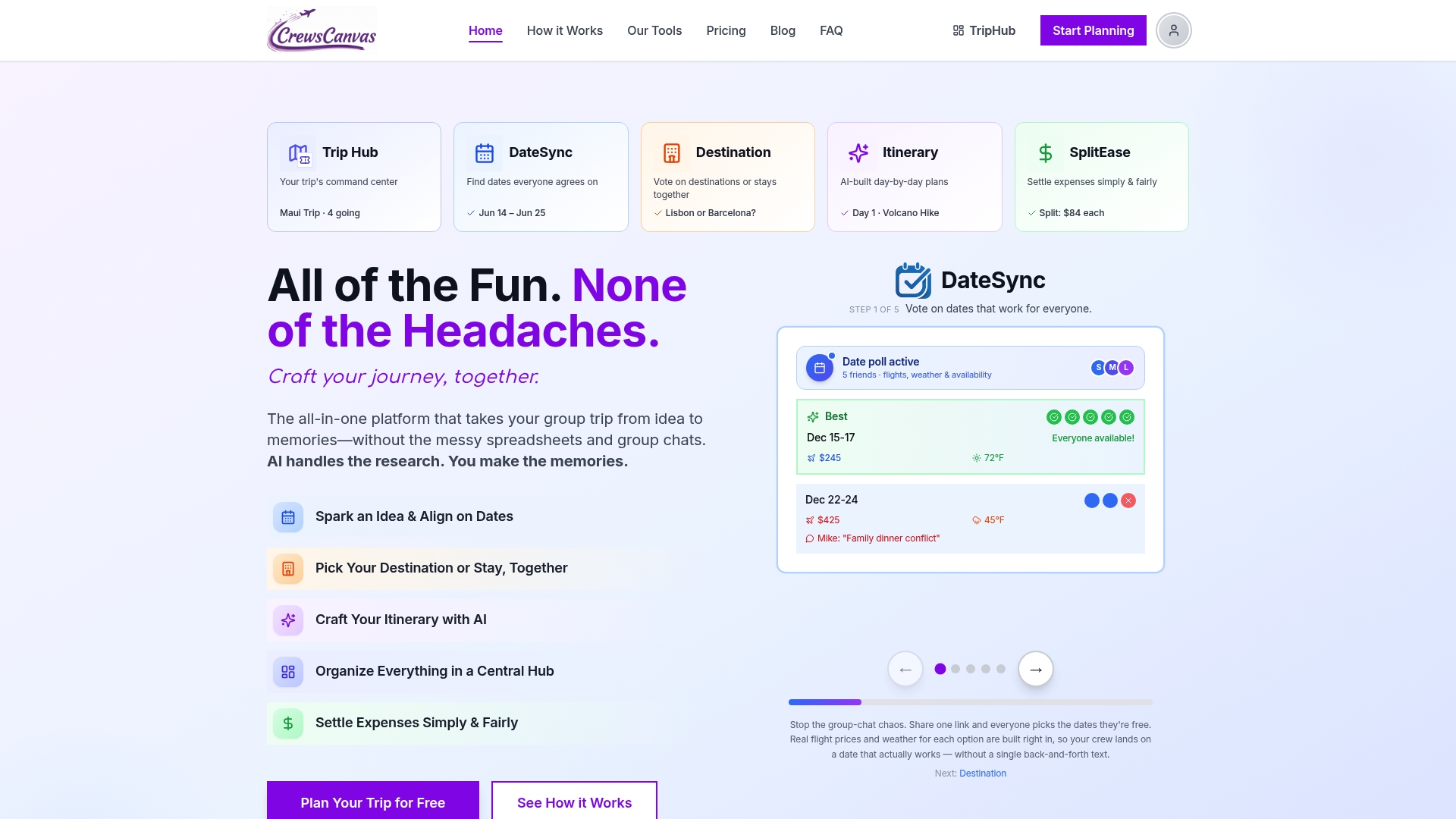
The platform combines date polling, an AI itinerary generator, and expense management features, designed so participants do not need to download an app or create an account. Photos of receipts, category tags, and per-person participation flags live in one shared hub instead of scattered across texts. Start free for smaller trips, or unlock added capacity with the Pro Subscription or a one-time One-Trip Pro upgrade for a single larger getaway. Set up your categories before your next trip's first booking, and settle up in minutes instead of days.
Sources
- Whom you pay matters: how the payment path of shared expenses affects purchase satisfaction — Journal of Consumer Research (2026)
- How to budget group trips — CNBC Select
- A guide to splitting travel costs — TravelInsured (2025)
FAQ
What Are the Main Travel Expense Categories for a Group Trip?
The eight standard categories are transportation, lodging, meals, activities, shared supplies, tips and service charges, booking fees and taxes, and incidentals. Most groups split lodging and transportation as package-total costs and keep meals or activities proportional when consumption varies, as outlined in TravelInsured's cost-splitting guide.
Should We Split Costs Equally or Proportionally?
Use equal splits for package-billed costs like a shared rental house, and proportional splits when people's spending genuinely differs, like bar tabs or optional excursions. A hybrid approach, mixing both within one trip, is what most groups end up using in practice.
How Do We Track Expenses Without Losing Receipts?
Photograph every receipt as soon as you get it, tag it by category and by who's included, and reconcile daily rather than waiting until the trip ends. Tools like CrewsCanvas's SplitEase handle the tagging and export automatically so nobody's reconstructing a week of spending from memory.
What Does CrewsCanvas Cost?
CrewsCanvas offers a free plan for smaller groups, a Pro Subscription at $9.99 per month, and a one-time One-Trip Pro upgrade at $14.99, all listed on the CrewsCanvas pricing page.
How Do We Handle Alcohol or Optional Activities Fairly?
List alcohol and optional excursions as their own line items rather than folding them into general meals or activities, and only charge the people who actually participated. Deciding this rule before the trip, rather than after the bill arrives, is what prevents most disputes.