
The fastest path to a great romantic weekend is simple: lock your dates, agree on a budget and pace, pick a destination close enough that travel doesn't eat your trip, book a romantic stay, and plan one or two anchor experiences while leaving the rest open. Research on self-expanding activities backs this approach, and a quick checklist below turns it into an evening's work.
TL;DR:
- Keep total travel time at or below one quarter of the trip; weekend escapes favor manageable drives, while longer breaks can support short flights.
- Divide spending among lodging, food, activities, and extras, then have each partner name one priority and one flexible preference before booking.
- Studies link novel or gently challenging shared vacation activities with higher post vacation intimacy and satisfaction, so choose an experience you can enjoy together.
- Reserve popular experiences after booking lodging, leave most hours open around one or two daily anchors, and confirm check in and transport the night before.
Table of Contents
- Your step-by-step planning checklist
- How far should you travel for a short getaway?
- Setting a budget you'll both enjoy
- Why one or two anchor activities beat a packed schedule
- Packing and pre-trip logistics that prevent stress
- Talking it through before you go
- Getaway types to match your mood
- What we've learned planning short trips together
- Plan the weekend without the back-and-forth
- FAQ
- Sources
Your step-by-step planning checklist
Most couples stall out trying to plan everything at once. Breaking it into order fixes that.
- Lock your dates. Check time off, childcare, and pet care before anything else.
- Talk about the "why." Name the trip's purpose (rest, adventure, celebration) and each partner's top priority.
- Agree on a total budget. Decide which line, sleep, food, or activities, matters most to each of you.
- Choose a destination and book lodging first. This anchors every other decision.
- Reserve one anchor experience and one special meal. Leave the rest of the schedule open.
- Finalize logistics. Confirm check-in times, transport, cancellation policies, and documents.
- Pack the night before. Set phone and work-check ground rules so you're actually present.
A few things help the list stick:
- Put the dates in both calendars the moment you agree on them.
- Book the anchor experience as soon as the stay is confirmed, popular slots fill fast.
- Skip hour-by-hour planning. Two fixed points per day are enough.
How far should you travel for a short getaway?
A simple rule keeps weekend trips from turning into travel days: aim for travel time at or under about a quarter of your total trip length, a guideline echoed in practical weekend-getaway planning advice. For a short trip, that means staying close enough to avoid spending too much time in transit. For a weekend escape, a manageable drive keeps the balance right. Longer weekends can support a short flight without losing much time to logistics.
- A short drive: best for a brief overnight.
- A manageable drive: a good fit for a weekend getaway.
- Short flights: more reasonable for a longer getaway.
- Considering an international escape: check your passport's expiration date now, since many countries require six months of validity beyond your travel dates.
When travel time is tight, pick a hotel in a walkable area with strong onsite amenities. It removes friction before the trip even starts.
Setting a budget you'll both enjoy
Money disagreements derail more trips than bad weather ever does. A short framework prevents most of it.
- Break spending into four buckets: sleep, food, activities, and extras.
- Pick one or two buckets to prioritize, a nicer room or one standout dinner matters more than a padded schedule.
- Splurge where it counts: an upgraded room, a couples' spa session, or a single memorable meal does more than five average ones.
- Agree on phone and work-checking rules before you leave, not at the hotel door.
A quick negotiation trick solves most "what do we actually want" conversations: each partner names one non-negotiable and one flexible preference, then you build the plan around those four answers.
Pro Tip: Set your total budget number before you start browsing hotels. It's much easier to say no to an upgrade than to claw back an overspend later.
Why one or two anchor activities beat a packed schedule
An anchor activity is a single planned experience, a dinner, a hike, a spa afternoon, that gives the day shape without locking up every hour. Studies of couples in the United States found that the quality of shared vacation experiences predicts stronger relationship functioning after the trip, and novel or gently challenging activities in particular are tied to higher post-vacation intimacy and satisfaction.
Strong anchor ideas include:
- A private or reservation-only dinner.
- A couples' spa treatment.
- A guided hike or scenic walk.
- A short boat trip or sunset picnic.
- A hands-on cooking class.
Sample weekend itinerary: Arrive in the evening and enjoy a relaxed dinner nearby. Build a full day around one anchor activity, with other time left open. Before heading home, make time for coffee and a slow goodbye.
Sample longer-getaway rhythm: Add an anchor activity on full days, keeping arrival and departure light. Reserve popular experiences in advance, especially for peak-season weekends.

Packing and pre-trip logistics that prevent stress
A short checklist the night before beats a scramble the morning of.
- Pack comfortable shoes, a special outfit, chargers, toiletries, and a small emergency kit.
- Confirm hotel check-in time, restaurant reservations, and any tour or activity pickups.
- Note parking details at your destination so you're not guessing on arrival.
- For international trips, check passport validity and visa rules well ahead, since travel.state.gov notes processing and validity requirements vary by destination.
- Screenshot confirmations and download offline directions in case signal is spotty.
Doing this the night before, not the morning of, keeps the first hours of the trip calm instead of rushed.
Talking it through before you go
The single biggest predictor of a smooth trip is a real conversation before you book anything. Relationship communication guidance recommends an unhurried talk about travel style and money well before departure, which prevents one partner from carrying all the planning weight.
- Name the trip's purpose out loud: rest, adventure, or celebration.
- Use anchors plus open time so the trip doesn't feel like performed romance.
- Agree on a simple conflict step: pause, breathe, decide, rather than letting small friction snowball.
Pro Tip: If plans change mid-trip, default to the original "why" you named together. It settles most disagreements faster than debating logistics.
Shared novel experiences paired with clear communication consistently show up in couple-vacation research as a driver of better post-trip relationship functioning, not just a nice-to-have.
Getaway types to match your mood
Different settings fit different goals, so pick the one that matches what you actually want from the weekend.
- Cabin: fireplace or hot tub evenings, slow walks, board games.
- Beach town: sunrise or sunset on the sand, casual seafood dinners, easy strolls.
- City break: a walkable neighborhood, one standout dinner, a museum or show.
- National park: a daytime hike, a packed picnic, stargazing, and simple lodging booked well ahead, a habit park planning guidance consistently recommends.
- Lake or countryside inn: dock time, a paddle outing, porch evenings.
For a destination with a built-in sense of occasion, a wine-country weekend with chauffeur-planned stops removes the driving logistics entirely, and a playful anchor like a private escape room booking works well for couples who want something interactive rather than purely scenic.
What we've learned planning short trips together
The same three snags can come up when planning a trip: picking dates, agreeing a budget, and untangling planning details spread across texts and emails. A sequential approach can help: settle dates, choose one anchor experience, book the stay, then split any shared costs. Skipping steps can turn a simple weekend into a scheduling headache.
— CrewsCanvas
Plan the weekend without the back-and-forth
We built CrewsCanvas to handle the parts of trip planning that usually turn into scattered texts and spreadsheets, which works just as well for a two-person getaway as it does for a group trip.
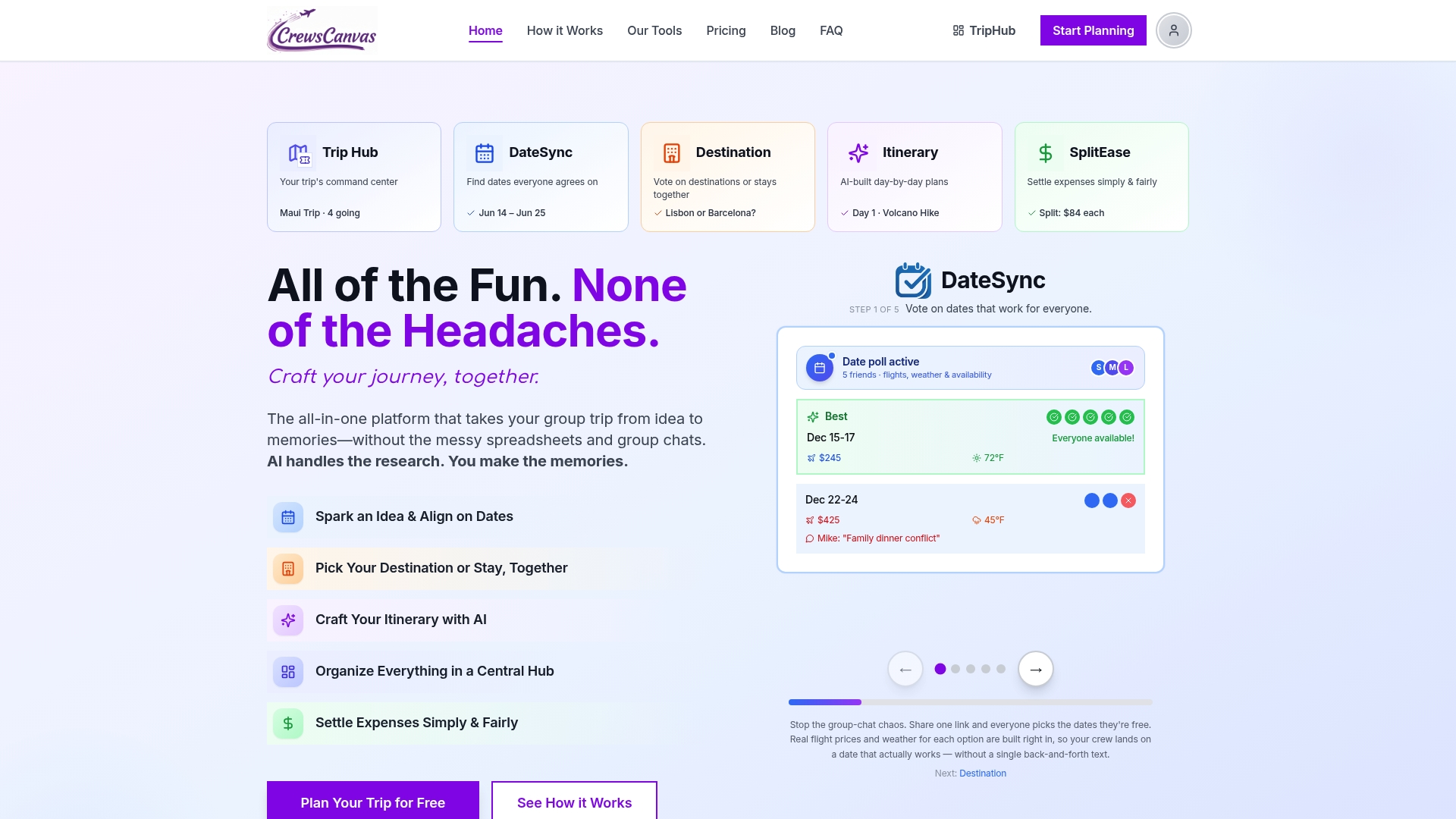
- DateSync lets both of you vote on dates in one place instead of trading five "what about this weekend" messages.
- Our AI itinerary generator sketches a sample plan around your anchor activity, which you can adjust or ignore entirely.
- SplitEase keeps shared costs, the hotel, the dinner, the gas, transparent so settling up after the trip takes a minute, not an argument.
Start with our free plan to see how it fits your next weekend, or check Pro Subscription and One-Trip Pro pricing if you want the full toolkit for trips to come.
FAQ
How often should a married couple go on vacation together?
There's no single rule, but relationship research on shared vacation experiences suggests that regular trips, even short weekend ones, support stronger couple functioning over time. A quarterly or twice-yearly short getaway is a realistic rhythm for many couples balancing work and other commitments.
Where is the best vacation spot for couples?
The best spot depends on what you want from the trip: a cabin for quiet reconnection, a beach town for relaxed days, or a city break for culture and good food. Matching the setting to your goal matters more than chasing a specific destination name.
How do you make a romantic weekend special?
Focus the day around one or two anchor experiences, like a private dinner or a couples' spa visit, rather than packing the schedule. Planning guidance for short getaways consistently points to this approach as what makes a weekend feel intentional rather than rushed.
How do you make a road trip fun for couples?
Keep travel time reasonable so the drive doesn't eat the trip, ideally under a few hours each way for a weekend getaway. Build in one stop or detour you both pick together, and treat the drive itself as part of the experience rather than just the commute to it.
Sources
- Researchgate
- Travel
- Couples vacations and romantic passion and intimacy
- Romantic Getaways: How to Plan a Weekend Away for Two