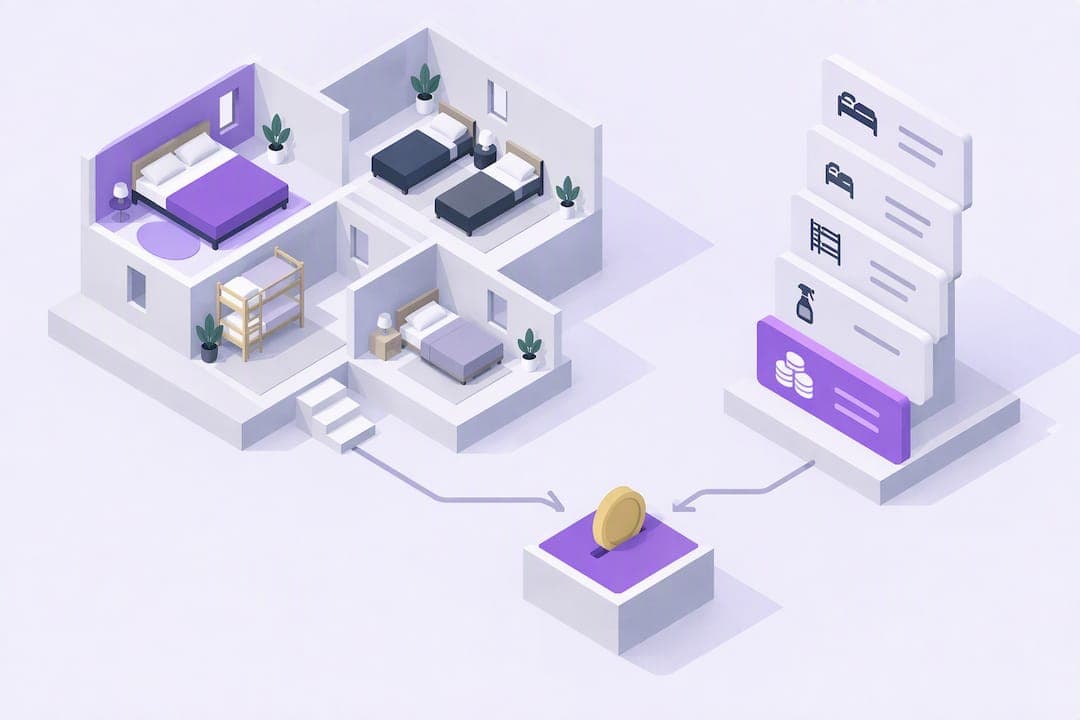
Choose your group's accommodation by matching the property type to three things: how many people need to sleep where, how much shared space your group actually wants, and what each person can afford. Start with hotels, vacation rentals, cabins or lodges, hostels, and resorts as your main options, then shortlist two or three properties and confirm layout, accessibility, and cancellation terms before anyone pays a deposit.
TL;DR:
- Hotels preserve privacy and staff support, while rentals and lodges provide shared kitchens or gathering rooms; resorts add meals and activities, and hostels prioritize price.
- Treat advertised capacity as a ceiling, assign each guest a real bed, check bedroom privacy, and aim for no more than four guests per bathroom.
- Compare complete itemized quotes, adding taxes, cleaning and resort fees, deposits, and extra guest charges before dividing the full total among paying guests.
- Hotel attrition clauses can penalize headcounts below the contract, so confirm cancellation flexibility and exclusive use in writing before committing.
- For accessibility needs, verify showers without a threshold, elevator access, and parking for the exact room type directly with staff, then keep written confirmation.
Table of Contents
- Compare the main accommodation types for group travel
- Capacity, room layouts, and sleeping arrangements
- Amenities, accessibility, and special needs checks
- Budgeting and pricing: per-person math, hidden fees, and negotiation tips
- Booking logistics: contracts, room blocks, deposits, cancellations, and timelines
- Safety, cleanliness, and pre-arrival verification steps
- A concise step-by-step checklist to finalize and confirm group accommodation
- CrewsCanvas perspective: how a collaborative planning platform helps choose and coordinate group stays
- Make accommodation decisions easier with CrewsCanvas
- FAQ
- Sources
Compare the main accommodation types for group travel
Each accommodation type solves a different group problem, so the right pick depends on what your crew actually wants out of the trip.
Hotels with group room blocks work well when your group values privacy and doesn't mind splitting into separate rooms. You book a set number of rooms at a negotiated rate, everyone gets their own space, and staff handle housekeeping and front-desk questions. The tradeoff is less shared common area unless you also rent a suite or meeting room.
Vacation rentals and private estates suit groups who want to cook together, hang out in one living room, and avoid hallway small talk with strangers. A single large house can sleep a sizeable group of people under one roof, which keeps everyone together but puts more logistics on the organizer, since there's no front desk to call at midnight.
Cabins and lodges fit nature-focused trips, like reunions near a lake or a ski weekend. They often combine private bedrooms with a shared great room, giving you a middle ground between a hotel and a full house rental.
Hostels and group dorms make sense for budget-conscious groups, especially younger travelers or backpacking crews, who prioritize cost over privacy and don't mind bunk-style sleeping arrangements.

Resorts work when your group wants built-in activities, food service, and kids' programming without anyone having to plan meals or entertainment.
Here's how group priorities typically map to type:
- Multi-generational family reunions usually lean toward vacation rentals or lodges for shared kitchens and common space.
- Weekend trips with close friends often favor hotels or smaller rentals for flexibility and privacy.
- Budget-driven groups, like college reunions or sports teams, often choose hostels or hotel group rates.
- Groups wanting full-service convenience, including meals and activities, tend to pick resorts.
Capacity, room layouts, and sleeping arrangements
Before you fall in love with photos, do the math on who actually sleeps where. A listing that says "sleeps 16" might mean four people on pull-out couches, which matters if your group includes older relatives or anyone who needs a real bed.
- Count heads, then count beds. List every attendee, then match each person to a specific bed or bunk, not just a total capacity number.
- Read the floor plan, not just the headline capacity. Confirm how many bedrooms have doors that close, how many bathrooms exist, and whether any sleeping space is a shared bunk room or a convertible sofa.
- Ask whether the property is exclusive use. Some private estates and cabins share a pool, parking lot, or common building with other guests even when the listing photos suggest you'll have the whole place to yourselves.
- Build a simple rooming list that assigns names to rooms or beds, flags any snorers who need their own space, and notes anyone traveling with young kids who needs a crib or adjoining room.
- Handle special requests early. If someone needs a ground-floor room, a quiet corner, or an accessible bathroom, note it in writing when you book rather than hoping it works out on arrival.
A rooming list sounds like overkill for a weekend trip, but it prevents the awkward scramble when eight people arrive and someone assumed they'd get their own room. Specialized planning resources, including rooming list templates for event planners, offer formats you can adapt even for a casual family trip.
Amenities, accessibility, and special needs checks
The right amenities depend on how your group plans to spend time together, not just where you sleep. A kitchen matters enormously if you're cooking group meals; it matters not at all if everyone's eating out.
- Kitchens and dining space matter most for multi-day stays where cooking saves money and keeps everyone together at mealtimes.
- Common areas (a living room, deck, or game room) give your group a gathering spot beyond individual bedrooms.
- Bathroom-to-guest ratio becomes a real bottleneck fast; aim for no more than three or four people per bathroom.
- Parking needs checking in advance if multiple cars are involved, especially at vacation rentals with limited driveway space.
- On-site staff at hotels and resorts can solve problems a rental's absentee owner can't.
If anyone in your group has a disability, confirm accessibility details directly with the property rather than trusting listing photos. The ADA's guide for places of lodging explains that staff should speak directly with guests who are blind or have low vision and discuss room preferences, rather than assuming a disability-designated room is the right fit. Ask specifically about roll-in showers, elevator access, and accessible parking for the exact room type you intend to book, since a property's general compliance doesn't guarantee every room meets your needs.
For guests who are deaf or hard of hearing, the ADA business brief on hotel communication notes that hotels must provide communication aids on request, including visual alarms and text telephone access in certain rooms. Document any accessibility request by email so you have confirmation before arrival, not a verbal promise that gets lost between departments.
Budgeting and pricing: per-person math, hidden fees, and negotiation tips
A quote that looks reasonable at the top can turn into a very different number once you add fees. To get a true per-person cost, add the base rate, cleaning fee, taxes, and any refundable deposit, then divide by the number of guests actually splitting the bill.
Watch for these common add-ons that inflate the final total:
- Cleaning fees on vacation rentals, often charged as a flat amount regardless of group size.
- Resort fees at hotels, which cover amenities you may or may not use.
- Security deposits, usually refundable but sometimes slow to return.
- Minimum-stay requirements that force you into extra nights during peak dates.
- Extra-guest charges once you exceed a property's base occupancy count.
Negotiation works best when you ask early and bring leverage. Hotels are often willing to adjust group rates or waive resort fees when you're booking a substantial block of rooms, especially during shoulder season. Vacation rental owners may drop cleaning fees or offer a discount for longer stays, particularly if you're booking well ahead of a slow period.
Pro Tip: Ask every property for an all-in quote with fees itemized line by line before you compare prices, since a lower nightly rate can hide a higher total once fees are added.
For groups juggling different budgets within the same trip, our guide on planning a group trip when everyone has different budgets walks through ways to keep the math fair.
Booking logistics: contracts, room blocks, deposits, cancellations, and timelines
Locking in group accommodation involves more paperwork than a solo trip, and skipping the fine print causes most group-booking headaches.
- Read the cancellation and attrition clauses first. Attrition clauses penalize you if your final headcount drops below what you contracted for, so confirm how much flexibility you have before signing.
- Clarify exclusive-use language in writing for private estates, since an owner who won't guarantee it may be renting nearby units separately even if the listing implies the whole property is yours.
- Understand the payment flow difference. Hotel group blocks typically collect individual payments at checkout, while vacation rentals usually require one organizer to pay a deposit and final balance, then collect from the group separately.
- Set a timeline: request quotes well in advance for peak dates, pay deposits several weeks after booking, and lock final headcounts a few weeks before arrival.
- Get written confirmation of room assignments, arrival times, and any special requests once the contract is signed.
Safety, cleanliness, and pre-arrival verification steps
A few checks before arrival protect your group from unpleasant surprises, especially when you're staying somewhere unfamiliar.
- Research the neighborhood using recent reviews and local safety information, and keep a backup lodging option in mind in case the property doesn't match expectations.
- Confirm current cleaning practices directly with the property. AHLA's Safe Stay guidance outlines cleaning, signage, and guest-communication measures hotels may use, but practices vary by property, so ask what's currently in place.
- Check emergency basics on arrival, including exit locations, smoke alarm visibility, and how to reach staff after hours.
The U.S. Department of State's lodging safety guidance notes that travelers face higher risk right after arrival, so verifying 24-hour security and smoke detectors early in your stay is worth the few extra minutes.
A concise step-by-step checklist to finalize and confirm group accommodation
Once you've weighed the tradeoffs above, use this sequence to move from decision to confirmed booking.
- Confirm final headcount and rank your group's top three priorities (privacy, shared space, or budget).
- Pick an accommodation type based on those priorities and request quotes from two or three properties.
- Verify room layout, bed counts, and any ADA accessibility needs with each property directly.
- Compare all-in costs per person, then finalize contract terms, including cancellation and attrition clauses.
- Collect deposits from the group and confirm the booking in writing.
- Build the final rooming list, confirm housekeeping schedule and kitchen access, and send arrival instructions to everyone before departure day.
CrewsCanvas perspective: how a collaborative planning platform helps choose and coordinate group stays
Most of the friction in group accommodation decisions comes from scattered communication, not a lack of good options. A poll buried in a group chat gets lost, someone books before the vote finishes, and suddenly three people have booked three different places.
Tools like DateSync and accommodation voting features exist to put the decision in one place everyone can see, so the group lands on dates and a property without the usual back-and-forth. Once the stay is booked, a shared rooming list keeps room assignments visible to everyone, and expense tools like SplitEase handle the math on cleaning fees, deposits, and per-person costs without anyone chasing payments individually. We'd still recommend confirming every logistical detail directly with the property itself; the platform handles the group's internal coordination, not the property's own contract terms.
— CrewsCanvas
Make accommodation decisions easier with CrewsCanvas
Choosing accommodation is only half the job; getting a group of busy people to agree on it is the other half. We built our accommodation voting tools so your shortlist turns into a decision in days, not weeks of scattered texts, and our shared rooming lists keep everyone clear on who's sleeping where before anyone packs a bag.
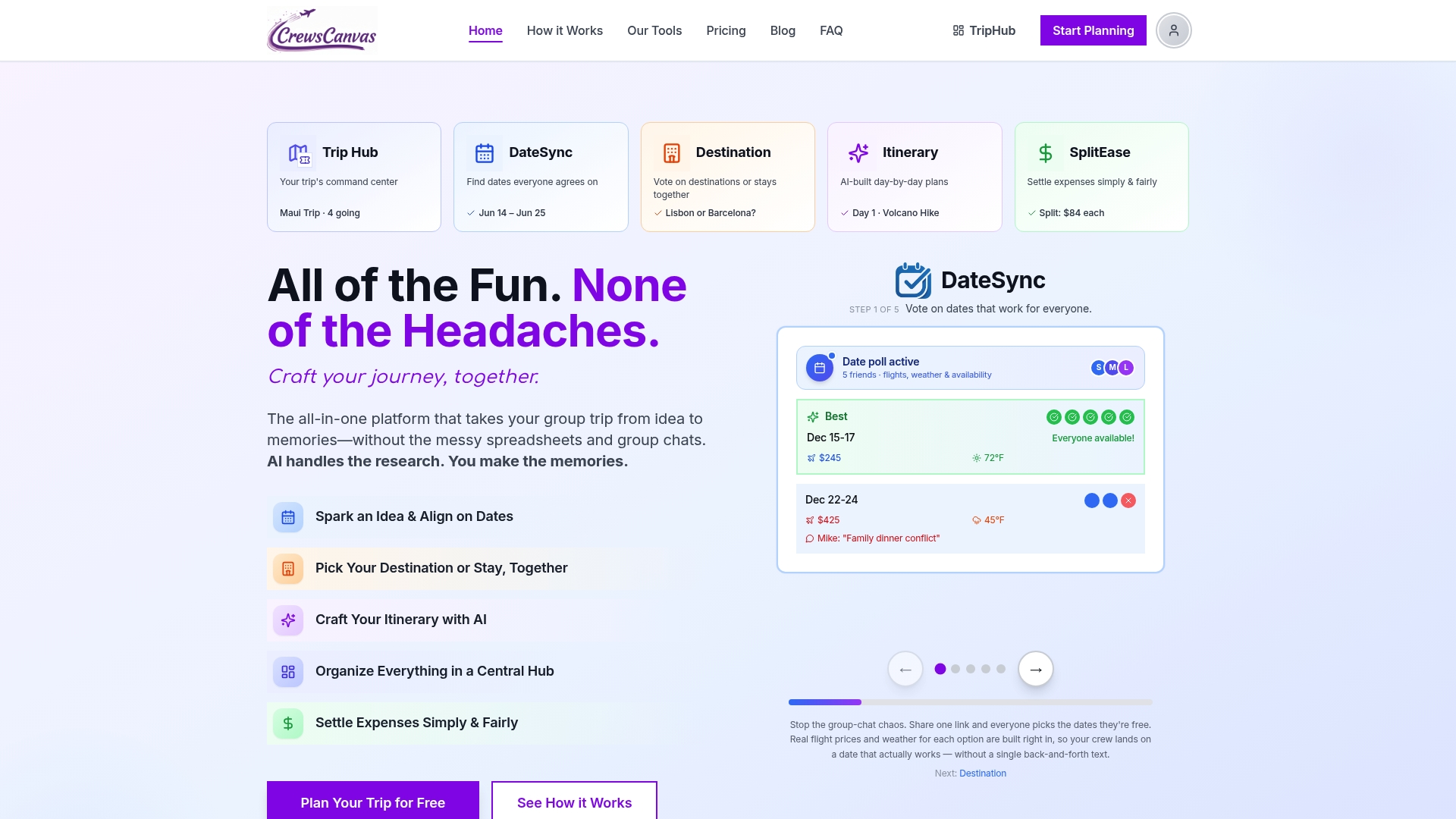
Once the property's booked, SplitEase handles the cleaning fees, deposits, and per-person splits automatically, so no one has to play accountant. Our free plan works for smaller trips, and One-Trip Pro unlocks full features for a single trip at $14.99 one-off if you'd rather not commit to a subscription. Browse our full toolkit and start your next group stay with everyone on the same page from day one.
FAQ
What's the best accommodation type for a large family reunion?
Vacation rentals, private estates, or lodges with shared common space tend to work best for multi-generational reunions, since they keep everyone under one roof with a kitchen for group meals. Hotels work too if privacy matters more than togetherness, but you'll lose the shared living room dynamic.
How do I know if a property is ADA accessible?
Call the property directly and ask about specific features like roll-in showers, elevator access, and accessible parking for the exact room type you're booking, since general compliance claims don't guarantee every room meets your needs. The ADA's lodging guide recommends discussing room preferences directly with staff rather than assuming placement in a disability-designated room.
What hidden fees should I watch for when booking group lodging?
Common hidden fees include cleaning charges, resort fees, security deposits, and extra-guest charges once you exceed base occupancy. Always ask for an itemized, all-in quote before comparing prices across properties.
How far in advance should we book group accommodation?
For peak dates, request quotes well in advance, pay deposits several weeks after booking, and lock your final headcount a few weeks before arrival. Booking earlier also gives you more room to negotiate rates or waived fees.
How can we keep everyone in the group informed during the planning process?
Centralizing decisions in one shared tool, rather than a scattered group chat, keeps everyone aligned on dates, accommodation votes, and payment splits. Platforms with built-in voting and expense tracking, like CrewsCanvas, reduce the back-and-forth that usually causes confusion in group trip planning.
Sources
- ADA — Guide for places of lodging
- U.S. Department of State — Lodging safety
- AHLA — Safe Stay guidance (Safe Stay V5)