
Lock your dates and per-family budget first, then choose a flexible, family-friendly destination, reserve travel and lodging early, and only then build the itinerary and hand out roles. Your first two moves today: send a short survey and pick one shared way to pay and track expenses. A single planning hub, like the one we built at CrewsCanvas, keeps both in one place.
TL;DR:
- Start large reunions about a year ahead, and survey relatives on dates, per family budgets, travel needs, and preferred activities with a two week reply deadline.
- Compare two or three destinations against overlapping dates, per family budgets, travel time, and rough airfare, lodging, and food costs before asking relatives to vote.
- Travelers who need accommodations should confirm accessible rooms, airport assistance, aisle chairs, and medical equipment with vendors in advance because airline accessibility practices vary.
- Assign a lead organizer, finance manager, activities coordinator, accessibility liaison, and local contact, then store reservations, costs, and changes in one shared hub.
Table of Contents
- How do you start the planning conversation with relatives?
- How do you pick a destination that works for every age?
- How should you choose dates and coordinate arrivals?
- How do you choose and book places to stay?
- What does a balanced reunion itinerary look like?
- Which roles do you need, and where should the group communicate?
- How do you include older adults and travelers with disabilities?
- Why does structured planning keep the peace?
- How can CrewsCanvas help you coordinate the whole reunion?
- FAQ
- Sources
How do you start the planning conversation with relatives?
Begin with a short survey, not a group chat. AARP guidance recommends collecting availability, budgets, and needs early and setting a two-week reply deadline, then turning answers into a shortlist. Ask these:
- Which date windows work for your family?
- What is your maximum budget per family?
- Who is flying, driving, or needs special travel arrangements?
- Does anyone need accessibility or medical accommodations?
- What is one activity you would hate to miss?
Next, form a small planning committee so one person does not carry everything. NEA's planning checklist suggests starting about a year ahead for large reunions and setting finance expectations early. That lead time lets people save, request time off, and RSVP with confidence. Lock airfare, lodging blocks, and special activities first.
To build the shortlist, group replies by overlapping dates and budget. Two or three options that fit most families beat one perfect plan that excludes someone.

How do you pick a destination that works for every age?
Judge each candidate on the same few criteria instead of arguing about favorites:
- Flight access: direct routes cut transfers and missed connections for fly-in relatives.
- Activity mix: a place with both relaxing and active options keeps toddlers and grandparents happy.
- Lodging variety: you want rentals, hotels, or resorts that suit different budgets.
- Seasonal price swings: peak weeks can price out some families.
Resorts, family-friendly cities, and large vacation rentals tend to be the most flexible for mixed groups, since they offer built-in activities and room to spread out.
Narrow to three finalists and ask relatives to rank them, weighting cost and travel time most heavily if many people fly in. Before going deeper, run a quick cost check: add rough airfare, lodging per night, and food for one family. If the total clearly exceeds a family's stated budget, drop that destination now.
How should you choose dates and coordinate arrivals?
Offer three date windows rather than an open-ended question, and set a firm RSVP deadline. If your group has many conflicting schedules, our guide on picking a vacation date walks through the polling process. Avoid major holiday weeks where you can, since fares spike. When many guests fly in, favor destinations with direct flights.
Then work through this arrival checklist:
- Suggest a group arrival window so most people land within a few hours of each other.
- Book refundable or flexible airfare when plans are uncertain, and consider travel insurance for pricey trips.
- Arrange local transfers, such as a shared shuttle or rideshare plan, for the arrival window.
- Build a buffer for late arrivals, like a self-check-in option or a designated greeter.
- Share every traveler's flight details in one place so the greeter can track them.
How do you choose and book places to stay?
Large rentals and lodge cabins give you shared kitchens, common rooms, and lower cost per person. Hotels and resorts offer ADA-accessible rooms, daily housekeeping, and on-site services. Large cabin groups can also lean on our partner's group cabin planning checklist for packing and logistics.
Whichever you pick, confirm these early:
- Request accessible rooms in writing and keep the confirmation.
- Verify bed configurations, parking, and shuttle options.
- Note cancellation deadlines and set a buffer date before them.
- Ask about group rates, a waived resort fee, or flexible deposit terms.
- Split sleeping arrangements so each family keeps some privacy.
- Hold a few extra rooms or choose refundable rates to absorb late RSVPs and staggered arrivals.
What does a balanced reunion itinerary look like?
Anchor each day with one big shared event, then add optional smaller activities so every age group can opt in or rest. For a weekend reunion, that might be a welcome dinner, a group outing, and a farewell brunch. A longer reunion can add a midweek rest day and optional excursions.
To build it:
- Pick the one main event per day and book it first.
- Reserve high-demand items early, like private tours or charter boats.
- Add two or three optional activities at different energy levels.
- Set sign-up deadlines for optional events so you can lock headcounts.
- Line up a backup indoor plan for bad weather.
Pro Tip: Stagger activity difficulty across days, so a strenuous hike is followed by a gentle beach or museum day.
If you want a head start, our itinerary builder drafts a day-by-day plan you can adjust together.
Which roles do you need, and where should the group communicate?
Splitting duties keeps one person from burning out. Budget Travel also stresses delegating tasks and making reservations promptly. Core roles:
- Lead organizer: owns the timeline and final sign-off on bookings.
- Finance manager: collects payments and tracks shared costs.
- Activities coordinator: books excursions and manages sign-ups.
- Accessibility liaison: confirms needs with every vendor.
- Local contact: handles on-site questions and emergencies.
Keep dates, itinerary, and expenses in one shared hub so nobody asks the same question twice. For late RSVPs or cancellations, agree on a cutoff date and make one person responsible for announcing changes.
How do you include older adults and travelers with disabilities?
Ask about needs in the survey, then confirm accommodations directly with every vendor. The CDC Yellow Book advises travelers with disabilities to assess each itinerary and confirm accommodations in advance, noting that airline accessibility practices vary and that travelers can rent medical equipment or reserve aisle chairs and airport assistance.
- Get written confirmation for accessible rooms.
- Request airport assistance and aisle chairs ahead of time.
- Check local availability of rental medical equipment.
- Save emergency contacts and the nearest medical facility.
- Review an accessible travel checklist before booking.
Planning ahead matters: FAA guidance on large groups says outreach to airport stakeholders and an operational plan for shuttles and arrival spaces improve coordination.
Why does structured planning keep the peace?
We have seen how a reunion can strain the very relationships it celebrates when one person absorbs every decision. Early consensus and clear roles protect those bonds and lower organizer burnout, while a single hub keeps decisions visible so questions stop repeating. Treat it as a quick experiment: send the survey this week, choose one payment path, and see how much quieter the group chat gets.
— CrewsCanvas
How can CrewsCanvas help you coordinate the whole reunion?
Fewer follow-up messages and a clearer budget: that is what we built CrewsCanvas to help with.
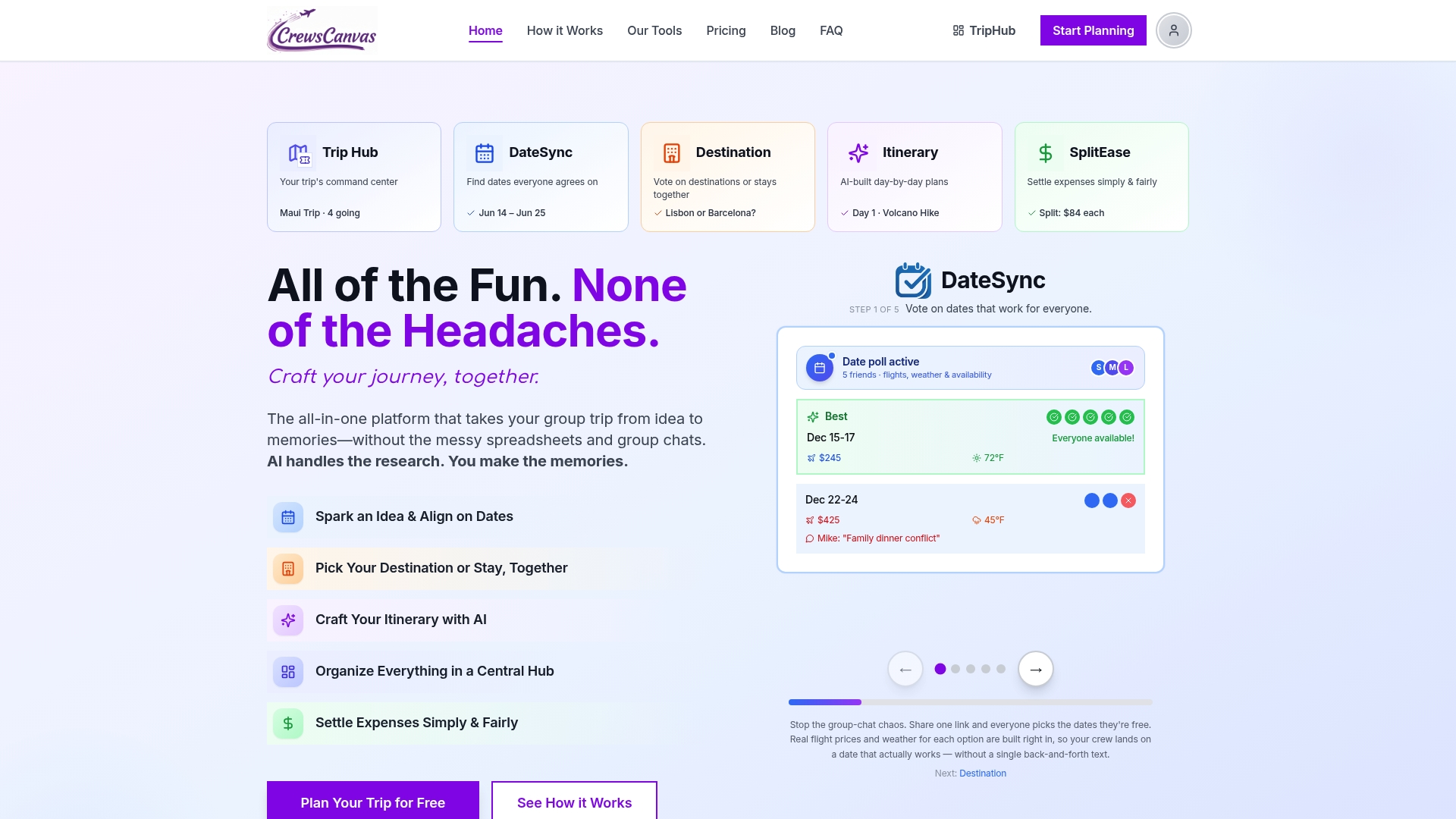
- DateSync: relatives vote on date windows.
- AI itinerary builder: drafts a balanced plan you can edit.
- TripHub: stores shared reservations.
- SplitEase: divides costs fairly.
Start on our free plan, or check pricing for Pro Subscription at $9.99 per month or One-Trip Pro at $14.99 one-off if your reunion needs more capacity.
FAQ
How do you plan a family reunion step by step?
Survey relatives on dates, budgets, and needs, then shortlist two or three destinations and vote. Reserve travel and lodging early, assign roles, and build an itinerary with one shared event per day. NEA recommends starting about a year ahead for large reunions.
What are the main stages of travel planning?
Most trips move through consensus on dates and budget, destination choice, booking travel and lodging, building the itinerary, and final confirmations before departure. For a reunion, add a role-assignment step early so tasks are shared.
What is the most affordable vacation for a family reunion?
Large vacation rentals or lodge cabins are often the most economical for big groups, since sleeping space and kitchens are shared. Choosing off-peak dates and a destination with direct flights also helps keep costs down.
How is a family reunion different from a family gathering?
A reunion usually brings extended relatives together, often from far away, around a planned multiday event or trip. A gathering tends to be smaller, more casual, and local, so it needs less travel and lodging coordination.
Sources
- Tips to Create a Harmonious Multigenerational Trip
- Travelers with Disabilities - CDC Yellow Book, 2026 edition - NCBI Bookshelf
- Accommodating Large Groups of Passengers with Disabilities
- Plan a Family Reunion Like a Pro | NEA