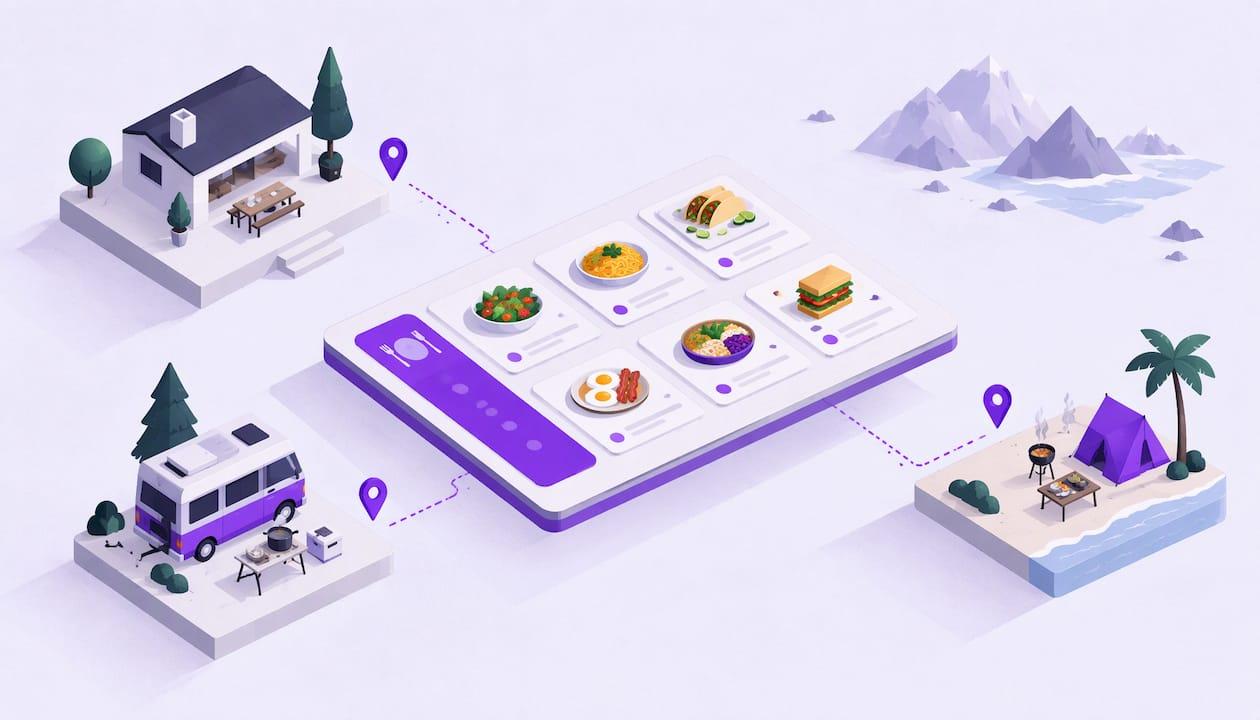
The easiest way to plan meals for a group trip is to split the work before anyone arrives: collect dietary needs first, give each meal an owner, shop once from a list built by meal, and track food costs in one shared place. Do that and nobody ends up cooking for 12 while everyone else watches a game. It also keeps the "who owes what for groceries" talk from lingering past the trip. We built CrewsCanvas for exactly this kind of shared planning, and its free plan is enough to start.
TL;DR
- Ask about allergies, restrictions and budget before you pick restaurants or recipes.
- Give every meal to a small team (two or three people) and keep everyone else out of the kitchen.
- Shop once on arrival day, with a grocery list organized by meal, not by aisle.
- Mix cooking nights with eating-out nights so different budgets and schedules all fit.
- Log every grocery run and dinner bill in a shared expense tracker so costs settle at the end, not in the group chat.
Table of Contents
- Why group meals go wrong
- Step 1: Ask what everyone needs before you plan anything
- Step 2: Decide which meals are group meals
- Step 3: Give every meal an owner
- Step 4: Pick recipes that survive a rental kitchen
- Step 5: Shop once, by meal
- Step 6: Handle dinners out without the argument
- Step 7: Share food costs fairly
- A worked example: 10 people, 3 nights
- Where CrewsCanvas fits
- Our perspective
- Aligning expectations early
- Limited kitchens and changing schedules
- FAQ
- Sources
Why group meals go wrong
Most group meal trouble isn't about food. It's about unclear ownership. One person shops for everyone, one person cooks three nights in a row, someone discovers on night two that a guest can't eat gluten, and the receipts live in five different pockets.
Three problems show up again and again:
- Hidden constraints. People are polite in a group chat. They say "I'm fine with anything" and then quietly go hungry.
- Unequal work. Without a schedule, the most helpful person ends up doing the most dishes.
- Unequal budgets. A steakhouse dinner is a treat for one traveler and a stretch for another.
The fix is a short system you set up once, in about an hour, during the planning stage. The rest of this guide walks through it.
Step 1: Ask what everyone needs before you plan anything
Start with questions, not menus. The Burning Man Project's communal kitchen guide suggests camp groups settle a few basics up front: whether everyone is comfortable eating the same foods, whether anyone has special dietary needs, and whether the group can agree on sharing shopping, costs, transport, set-up, cooking, clean-up and trash. A beach house is a long way from the Nevada desert, but the questions carry over.
The National Wildlife Federation's meal planning guidance adds the counting part: list the group's dietary do's and don'ts (allergies, gluten sensitivity, vegetarian needs), then count people, days and meals, snacks included, and choose options that work for everyone with back-up choices for anyone who needs an alternative.
Here is a short intake list you can send to the whole group:
- Hard restrictions: allergies, celiac disease, vegan, kosher, halal. These are non-negotiable.
- Soft preferences: foods people dislike, spice tolerance, "I'd rather not eat fish every night."
- Kid needs: picky eaters, early dinners, snacks.
- Meal budget: how much each person is comfortable spending on food, answered privately.
- Arrival and departure times: this decides which meals you are actually feeding.
Send it as a simple form or a pinned message, not a debate. A checkbox is easier to answer honestly than a question asked in front of 11 people.
Treat hard restrictions as filters
If one traveler has a serious allergy, that rule applies to the whole shared meal, not just their plate. Choose dishes that are safe for everyone, or give the allergic guest a clearly separate option and keep its prep area, utensils and serving spoons apart. Soft preferences then simply reorder what's left. Three or four menus that all genuinely work beat twenty ideas that need a long vote.
For a serious allergy, the guest's own doctor or allergist is the right person to say what is safe, and they should tell the group what cross-contact means for them.
Step 2: Decide which meals are group meals
Not every meal needs a plan. A trip where all 12 people eat every meal together is expensive, slow and tiring. Sort the days into three buckets:
- Group cooking: usually one or two dinners, plus an arrival meal.
- Self-serve: breakfasts and lunches from shared staples such as bread, eggs, fruit, cereal, deli meat and snacks.
- Eat out or on your own: one night out, and any meal that falls during a separate activity.
A useful starting point is a "2-1-1" approach: two easy, repeatable breakfasts, one cookable dinner and one flexible eat-out dinner. Topsail Island's vacation rental meal guide suggests counting your total meals and the people sharing them, then planning day by day with three meals plus snacks, and starting with dinners because leftovers can become lunch or breakfast.
This structure also solves the budget problem. When only a few meals are shared, people can eat to their own budget the rest of the time. If you're planning around very different budgets, our guide to planning a group trip when everyone has different budgets goes deeper.
Step 3: Give every meal an owner
The most useful rule we've found comes from a 20-person chalet plan by Blue View Chalets: each meal belongs to a team of two or three, everyone else stays out of the kitchen, and the dishwasher runs after every meal. If your rental has two kitchens, they also suggest assigning lanes, with one kitchen handling breakfasts and the other the big dinner, so nobody fights over oven space.
Try this sample for a weekend with four households:
| Meal | Owner | Style |
|---|---|---|
| Friday arrival dinner | Household A | Build-your-own taco or chili bar |
| Saturday breakfast | Household B | Self-serve, shared staples |
| Saturday lunch | Everyone | Sandwiches, fruit, snacks |
| Saturday dinner | Household C | Baked pasta or sheet-pan chicken |
| Sunday brunch | Household D | Eggs, pancakes, fruit |
| Sunday dinner | Eat out | Reservation made in advance |
Two habits keep the system fair. First, the cooks don't clean up: the people who didn't cook handle the dishes. Second, the cook decides the menu. Once someone owns a meal, they get final say, as long as it respects the restrictions you collected in step 1.
Plan for staggered arrivals
Groups rarely arrive together. For check-ins spread between 4 and 9 p.m., Blue View Chalets recommends a build-your-own taco or chili bar that holds for hours: two slow-cooker-scale pots, warmed tortillas and spread-out toppings, with one team of two prepping it and late arrivals serving themselves. Chili and taco bars also handle vegetarians and gluten-free eaters easily, since each person assembles their own plate.
Step 4: Pick recipes that survive a rental kitchen
Rental kitchens come with three dull pans and a knife that can't cut a tomato. Condé Nast Traveler's group trip meal guide advises keeping recipes simple: avoid dishes that need many small spice amounts or equipment beyond a basic rental kitchen, and choose one-pot stews over rice or bread, crowd-pleasing pasta and large-format proteins like roast chicken or slow-cooked pork shoulder. It also offers a reliable plate formula: a meat (figure one-third pound per person), a starch, a cooked vegetable and a big green salad. Scale up when in doubt, since leftovers help between meals.
Good group dinners usually share these traits:
- They can be made ahead or held warm.
- They need one or two pots, not six.
- Each person can customize their plate.
- Leftovers turn into lunch.
Keep snacks on hand too. Dinner almost always runs late, and a loaf of bread, dips and cheese keep everyone friendly while the pasta water boils.
On food safety, keep perishables cold, wash hands and surfaces between raw and cooked foods, and use a food thermometer for meat. If you're cooking for kids, older relatives or anyone with a health condition, follow your local health authority's food safety guidance.
Step 5: Shop once, by meal
Grocery runs are where group meal plans quietly fall apart: duplicates, forgotten items and three separate trips. Blue View Chalets recommends shopping once near your stay on arrival day, building the list by meal instead of by category, and splitting the run so one vehicle handles the big shop while the rest of the group checks in. In their plan, groceries for 20 people fit in two carts once meals are planned.
A clean shopping process looks like this:
- Each meal owner writes their own ingredient list, scaled to headcount.
- One person merges the lists and removes duplicates, such as three households each buying olive oil.
- A separate "staples" list covers breakfast, snacks, drinks, coffee, foil and trash bags.
- One or two people do the shop and photograph the receipt right away.
If you'll be traveling with several generations, keep the plan simple and the shared highlights few. Hidden Door Travel makes a similar case in its piece on multigenerational travel planning, where one lead organizes and the group shares just a few highlights. Meals work the same way: one lead, a handful of shared dinners.
Step 6: Handle dinners out without the argument
Eating out is the part of group meal planning that most often spirals into a 90-minute text thread. Use the same order as before: constraints first, restaurants second.
- Filter by hard restrictions, then by price range the group agreed on.
- Shortlist about three to five places that truly work. More than that makes people stall.
- Vote, then book. A big group should reserve in advance.
- Save the reservation details, including time, name and confirmation number, where everyone can find them.
That last point matters more than it seems. When the confirmation number lives in one person's email, that person becomes the group's help desk. Shared reservation storage, like our TripHub, keeps these in a single place anyone with the trip link can open.
Step 7: Share food costs fairly
Food is the expense that causes the most small frictions: one person buys the big grocery run, another picks up the bar tab, and someone treats everyone to breakfast. A Kttipay-commissioned survey of 1,000 Australians aged 18 to 35, reported by Travel Weekly, found 40% disliked being left out of pocket on shared bills, and 36% said they always end up paying more than their fair share. It surveyed one country and age band, but the feeling will be familiar to most trip organizers.
A few simple rules head off the awkwardness:
- Agree what's shared and what's personal before the trip. Groceries, group dinners and shared drinks go in the pot. Personal drinks and extra treats stay personal. Legends Golf's cost-splitting guide boils it down to: if it benefits the whole group, split it; if it's personal, pay your own way.
- Pick a food method. You can split every receipt equally, or use a flat daily amount per person. The Burning Man guide suggests charging each person $10 for food per day, covering water and supplies, which is a simple model for a communal kitchen.
- Let different budgets coexist. Condé Nast Traveler advises asking each person privately what they're comfortable spending and settling on a number closer to the lowest than the highest. Keeping some meals optional lets bigger spenders enjoy a nicer dinner without pulling everyone else along.
- Log expenses as they happen. Receipts you photograph at the checkout are receipts you won't lose.
For more on the money side, see our guides on splitting costs on a group trip, itemized expense splitting and group trip budgets.
A worked example: 10 people, 3 nights
Say five couples rent a lake house for a long weekend. Here's how the system plays out.
Before the trip. The organizer sends a short form. Results: one guest has a tree nut allergy, two are vegetarian, and one couple prefers to keep food spending low. The group decides on two cooked dinners, one dinner out, self-serve breakfasts and lunches.
Assignments. Couple 1 owns the Friday taco bar. Couple 2 owns Saturday's baked pasta, with a vegetarian tray made in a separate dish and tree nuts kept out of the house menu. Couple 3 owns Sunday brunch. Couples 4 and 5 handle the dishes on Friday and Saturday and swap on Sunday. The Saturday night restaurant is chosen from three options and reserved ahead.

Shopping. Each owner sends a list by meal. Couple 4 merges them, adds a staples list and does the arrival-day shop. They photograph the receipt and log it.
Settling. The trip ends with every food expense in one place, and the group settles once rather than passing money around all weekend.
The result: nobody cooked more than once, nobody washed dishes after cooking, and nobody had to ask for the receipt later.
Where CrewsCanvas fits
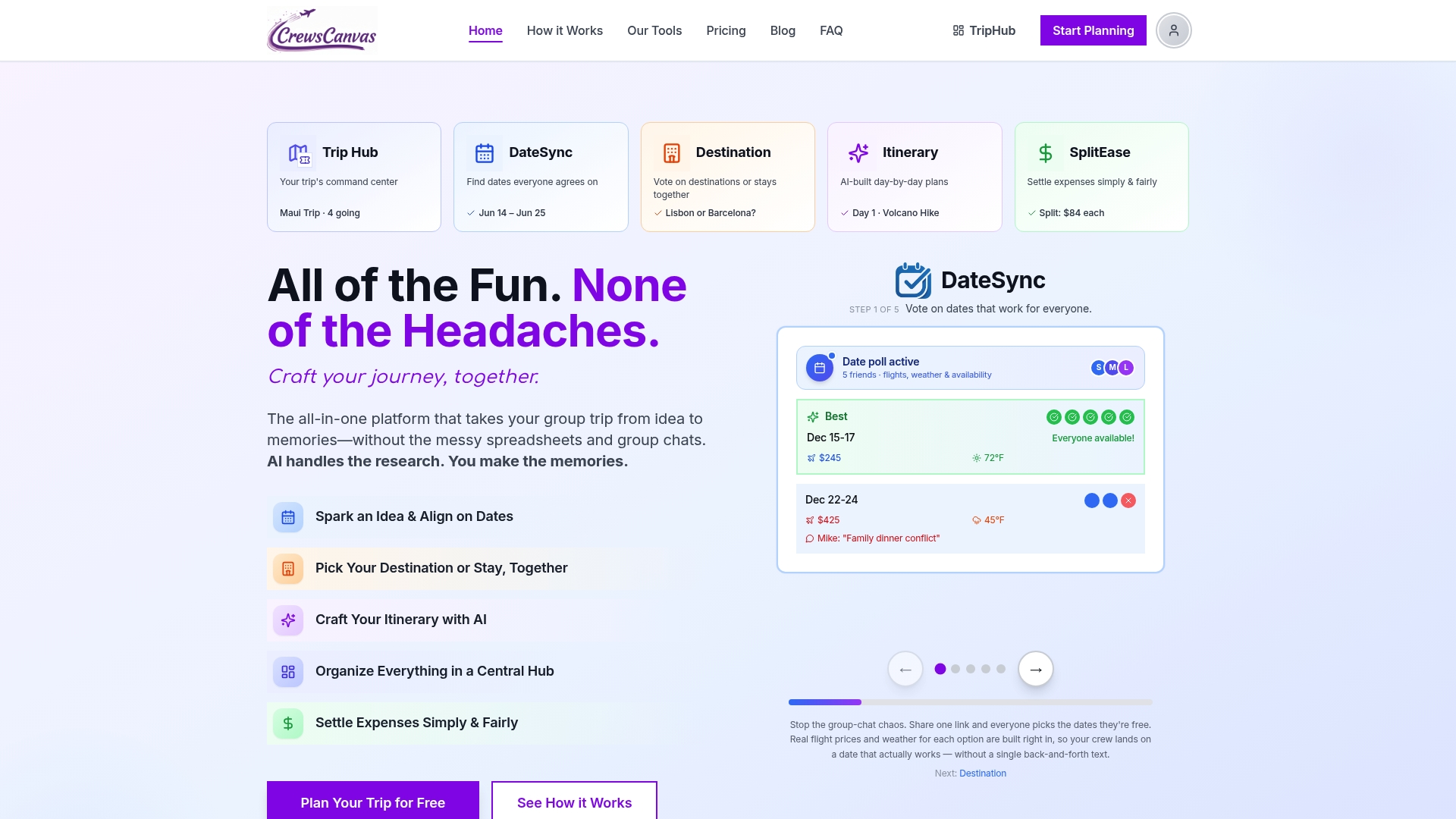
A meal plan is one part of a trip plan, and it only works if the dates, the place and the budget are settled too. With CrewsCanvas, our DateSync lets the group vote on dates, and the group can also vote on destinations and accommodation. The itinerary builder gives you an AI-generated plan you can customize, so you can drop in dinner reservations and cooking nights alongside activities. TripHub stores shared documents and reservations in one place.
For the food budget, SplitEase tracks shared costs, scans receipts and settles balances. Everything works on the web, and participants don't need to install an app or create an account to use the shared link.
The Free plan suits small groups. Pro Subscription is $9.99 per month, and One-Trip Pro is a $14.99 one-off payment for a single trip. You can compare them on the pricing page.
If you'd like more ideas for the rest of the planning, our shared travel itinerary guide shows how to build a schedule your group will actually use.
Our perspective
Group trips rarely fall apart over the destination. They fall apart over small, unowned tasks: who is buying the groceries, who's paying for the Saturday dinner, who has the reservation number. Meals bundle all three into a single weekend.
That's why we built CrewsCanvas around one shared place instead of a pile of spreadsheets and chats. The dates get decided in DateSync, the plan lives in the itinerary, the confirmations sit in TripHub, and the money is tracked in SplitEase, with receipt scanning for the big grocery run.
We also think participants shouldn't have to sign up for anything to take part. When the whole group can open a link and see what they're cooking, what they owe and where dinner is, planning becomes something people join, not something one organizer carries.
CrewsCanvas
Aligning expectations early
A meal plan is a form of expectation-setting. People who know in advance that Saturday is a cooking night, and that Sunday is on their own, rarely complain. Marbella Golf Times makes a similar point in its article on aligning group trip expectations: agree on the shape of the trip before you book, and the details are easier to settle.
For meals, that means deciding three things before you leave:
- How many meals are shared versus on your own.
- How food costs get split and settled.
- Who owns each shared meal, including cleanup.
Put those in writing in your trip plan, and you will rarely need to renegotiate on the trip itself.
Limited kitchens and changing schedules
Not every trip has a full kitchen. If you're in hotel rooms or a place with a small fridge, shift the plan toward self-serve staples, shelf-stable snacks and one or two restaurant meals. For a team retreat with scheduled sessions, count the meals that are already covered, like a conference breakfast, before you buy anything, and keep a small backup for meetings that run late. If a mini-fridge is your only storage, check that it keeps food cold enough, and buy perishables close to when you'll eat them.
A pre-set arrival meal also helps when you land late: something cold, simple and already waiting, so nobody is hunting for an open restaurant at 10 p.m.
FAQ
How do you plan meals for a large group on vacation?
Give each meal to a team of two or three people, keep everyone else out of the kitchen, and shop once on arrival day using a list built by meal. Mix a couple of cooked dinners with one night out and self-serve breakfasts and lunches. Log the receipts in one shared place so you can split costs at the end.
How do you handle dietary restrictions in a group?
Ask everyone privately before you plan any menu, using a short form. Treat allergies and medical restrictions as hard rules that apply to every shared dish, and treat preferences as a way to choose among the options that remain. For a serious allergy, the traveler's own doctor can say what precautions matter.
How do you plan meals when travelers have different budgets?
Ask each person privately what they're comfortable spending and set the shared amount closer to the lowest answer than the highest. Keep only a few meals as group meals and let everyone eat to their own budget the rest of the time. Make optional extras, like a fancy dinner, pay-as-you-join.
What is the best way to split grocery costs on a trip?
Decide before the trip what counts as shared, then log each receipt as it happens. You can split shared groceries equally or use a flat daily food amount per person. A shared expense tracker with receipt scanning, like SplitEase, keeps the totals in one place until you settle.
What should we cook for a big group?
Choose dishes that hold well and need little equipment: taco or chili bars, baked pasta, sheet-pan chicken with vegetables or a grill night. Avoid anything that must be fried in batches or served hot all at once. Build-your-own meals also handle different diets with the least effort.
Sources
- Communal Kitchens, Burning Man Project
- Meal Plan, National Wildlife Federation
- Feeding 20 at an Ontario Chalet: A 3-Day Meal Plan, Blue View Chalets
- Everything You Need to Plan Crowd-Pleasing Meals for Your Group Trip, Condé Nast Traveler
- How to Meal Plan for a Vacation Rental Stay, Topsail Island
- Gen Z and Millennials say group travel makes for awkward financial interactions, Travel Weekly
- Splitting Costs Fairly on a Guys' Golf Trip, Legends Golf
- Multigenerational Travel Planning, Hidden Door Travel
- How to align golf trip expectations for groups, Marbella Golf Times